




 Click it and Unblock the Notifications


Latest Updates
-
 Chana Masala Recipe: Experience Dhaba Style Authentic Taste
 -
 Struggling With Oily Skin This Summer? Simple Tips to Keep Shine Under Control
 -
 Garlic Bread Recipe: The Cheesy Bakery Style Trick You Need
 -
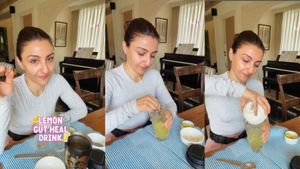 Soha Ali Khan Swears By This ‘Gentle Game-Changer’ Lemon Drink for Gut Health: Full Recipe Inside
 -
 World Health Day 2026: You’re Not As Healthy As You Think—Here’s Why
 -
 One Pot Easy Lunch Recipe: Flavorful Veg Pulao
 -
 Karan Aujla India Tour Controversy: Lucknow and Ludhiana Shows Cancelled—What Went Wrong?
 -
 Kissing Disease Linked to 3x Higher Risk of Multiple Sclerosis: What You Should Know
 -
 Feeling Drained in the Heat? 10 Healthy Drinks to Sip This Summer
 -
 Happy Birthday Rashmika Mandanna: Steal Her White Looks For Easter 2026 Festive Parties And Celebrations


The Hidden Side of the Bottom


Mixing views of top psychoanalysts, philosophers, scientists and artists, La Face Cachee des Fesses (The Hidden Side of the Bottom) charts the importance of 'derrière' in bipedal locomotion.
"They are present in daily life and yet they have never been considered a serious subject of study in their own right," claim the authors of La Face Cachee des Fesses.
The bottom line is that, the film says, without our Gluteus Maximus, humans would never have come down from the trees.
Claudine Cohen, science historian at Paris' Higher School of Social Sciences said that the gluteal muscles are unique to humans, enabling bipedal locomotion. Its size and strength developed to fulfill an essential human need and that is an erect posture and walking.
The documentary will be broadcast on the Franco German channel, Arte. An accompanying book will be on sale in all French museum shops starting this week.
Edward Lucie Smith, an art historian, pointed out that though we have a special relationship with this part of the body. there is no exact English translation for the word covering the thighs, the bottom and the loins.


 Continue with Google