




 Click it and Unblock the Notifications


Latest Updates
-
 Designer Neeta Lulla Reveals The Story Of Silver Gown That Sridevi Wore Before Kylie Jenner
 -
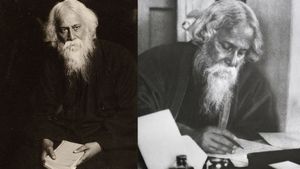 Rabindranath Tagore Jayanti 2026: 10 Quotes On Love, Friendship And Hope On Gurudev’s 165th Birth Anniversary
 -
 Why Stress Shows Up First in the Stomach: Expert Explains
 -
 Beetroot Juice Recipe: Your Ultimate Detox Morning Drink
 -
 Horoscope for Today May 07, 2026 - Small Choices Bring Steady Progress
 -
 Street Style Paneer Roll Recipe: Your New Dinner Favorite
 -
 Celeb Beauty Routine: How Simple Kaul Survives Extreme Summers With Matcha, Malmal, and Nimbu Paani
 -
 Loaded Crunchy Snack Nachos Recipe: Your New Go-To
 -
 Mother's Day 2026: Health Checkups Every Mother Should Prioritise After 35
 -
 Beyond Calories: Why India Needs to Focus on Digestive Health to Fight Malnutrition


India's PadMan Arunachalam Muruganantham Is A 2026 Nobel Peace Prize Nominee

In the late 1990s, inside a modest home in Coimbatore, Tamil Nadu, Arunachalam Muruganantham noticed something that most men around him had never thought to question. His wife was using old cloth during her periods because branded sanitary pads cost more than their household could reasonably spend. He started asking why. That question would eventually cost him his marriage, his social standing, and very nearly his sanity before it changed the lives of millions.

On 3rd May 2026, Muruganantham, now widely known as the 'PadMan' of India, announced that he has been listed as a nominee for the 2026 Nobel Peace Prize. The recognition, long overdue in the eyes of many who have watched his work unfold over two decades, places him among some of the world's most significant changemakers.
The Man The Village Called Mad
When Muruganantham began researching menstrual hygiene in the early 2000s, the reaction from his community was not curiosity. It was ridicule. He wore a bladder of animal blood to test his prototypes, kept rejected pad samples in a bag that soon earned him a reputation as something between eccentric and unhinged, and eventually found himself abandoned by his wife, his family, and his village. He did not stop.
With no formal education and no laboratory, he built a low-cost machine to produce sanitary pads at a fraction of the cost of commercial brands. What he did next was, arguably, the most important part. He refused to sell the patent to corporations. Instead, he distributed the machine to rural women, training them to produce and sell pads within their own communities - creating not just a product, but a livelihood.
A Movement, Not A Machine
His decentralised model now runs across 27 states in India and over 100 countries, improving menstrual access while creating women-led livelihoods at the grassroots level.
This is where his work transcends hygiene and enters the territory of human rights. Period poverty is not merely a matter of inconvenience. It keeps girls out of school, restricts women's participation in public life, and compounds existing gender inequality with an additional layer of shame, one that most societies have historically preferred not to name. Muruganantham named it. Loudly, persistently, and at considerable personal cost.
His story reached a mainstream Indian audience through the 2018 Bollywood film PadMan, starring Akshay Kumar and directed by R Balki, which went on to win the National Film Award for Best Film on Other Social Issues. The film did what few social campaigns manage: it brought a conversation about menstruation into living rooms, theatres, and dinner table arguments across the country.
Why A Peace Prize Makes Sense
Muruganantham is one of 287 candidates nominated for the 2026 Nobel Peace Prize, of which 208 are individuals and 79 are organisations. His nomination was submitted by a Dean from Aravind Eye Hospital in Pondicherry and American teams working there, and was accepted within 24 hours.
Speaking to ANI, Muruganantham said he was unprepared for the news. "I couldn't believe it at first... For the Nobel Prize, you cannot submit your name, nor can your friends or family. It has to be a third party... It was accepted within 24 hours... I'm really proud," he said.
The nomination also signals something broader about how the Nobel committee is thinking about peace. His work addresses a form of inequality that has long remained invisible - one that affects education, restricts mobility, and reinforces gender disparities. By enabling women to become producers and entrepreneurs, his model contributes to more equitable communities. That is, by any reasonable definition, a form of peace-building.
Bottomline
Arunachalam Muruganantham did not set out to win a prize. He set out to answer a question his wife's dignity had forced him to ask. The Nobel nomination is the world catching up to what rural women across 27 states and 100 countries have known for years - that when you give a woman access, agency, and the ability to care for her own body, everything else follows. The machine he built was never really about pads. It was always about what happens when someone refuses to look away.

 Continue with Google