




 Click it and Unblock the Notifications


Latest Updates
-
 Horoscope for Today April 15, 2026 - Practical Clarity & Steady Comfort
 -
 Happy Vishu 2026: 25+ Malayalam New Year Wishes, Captions, Posts And Status For Instagram, WhatsApp And X
 -
 Spicy Minced Meat Special Chicken Keema Recipe
 -
 Kareena Kapoor Khan’s ₹98,000 Kurta Set Is Proof That Classic Doesn’t Need Reinvention
 -
 Golden Crispy Bread Rolls Recipe For Irresistible Tea-Time Snacking
 -
 Poila Baisakh 2026: Significance, Rituals And History Of Bengal’s Cultural New Year
 -
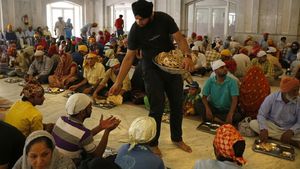 Baisakhi 2026: How Harvest Turns Into Shared Meals Through The Langar Tradition
 -
 Homestyle Dal with Twist: The Ultimate Chana Dal Recipe
 -
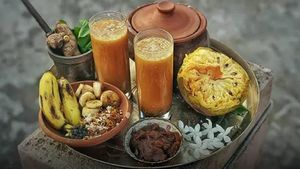 Pana Sankranti 2026: Why This Odia New Year Is Rooted In Summer Survival Traditions
 -
 Ambedkar Jayanti 2026: 10 Thought-Provoking Quotes Marking Dr. B.R. Ambedkar’s 135th Birth Anniversary


Karwa Chauth


The Legend
The popular belief goes with Shiva narrating the significance of Karwa Chauth to Parvati. Draupati was informed of Karwa Chauth by Lord Krishna in the Dwapara Yuga. It is said that Krishna asked Draupati to observe this fast for Arjuna to emerge victorious in the battle of Kurukshetra.
As per the legend, Karwa, a devout wife bound the crocodile that threatened her husband's life with a cotton yarn and commissioned Lord Yama to dispose it to hell. The hesitant Lord of death however yielded to her words in fear of her powers, the outcome of her chastity and sent the crocodile to hell. The couple were then said enjoy marital bliss for a long time. Commemorating the event and wishing the longevity of their husbands, Karwa Chauth is observed by married women in India, especially in the Northern parts.
It is also a belief that the festival that was rather initially started as a seasonal celebration of the month of Autumn, later emerged with mythological attachments for the now existing Karwa Chauth that is observed for the longevity of the life of one's husband.
The Festival
The fast of Karwa Chauth is usually observed nine days prior to Diwali. It is celebrated on the fourth day of Sharad Poornima. It is celebrated on the Chaturthi Tithi after the full moon in the month of Kartik according to the Hindu calendar. It is observed at moon rise and Poorvaviddha and ideal to be observed in Tritiya viddha. 'Karwa' would mean a clay pot with a spout symbolising peace and prosperity, and 'Chauth' would mean fourth night of the full moon. The fast begins at moon rise in the presence of the husbands and ends on the next day at moon rise. The fast is broken by offering prayers to the moon and having the first handful of food and water from their husbands after which they partake the ceremonial food.
There are variations in the ritual involved. In some parts wives look at the moon through a sieve and in other parts they see the reflection of the moon in a vessel of water or through the Dhupatta. After having seen the moon they cover their face with the hands to behold the face of only their beloved. This marks the climax as eyes bespeak tales of love and belongingness.
On the occasion a Kalash is filled with milk or water with five different metals, gold, silver, copper, brass and iron and presented to a Brahmin and other women, the distribution of which bestows longevity and marital bliss. Poojas and special worship and listening to the tale of Karwa Chauth is also followed to the culmination of the fast..
In short the festival enhances the love, loyalty and commitment of married couples.


 Continue with Google