




 Click it and Unblock the Notifications


Latest Updates
-
 Horoscope for Today April 15, 2026 - Practical Clarity & Steady Comfort
 -
 Happy Vishu 2026: 25+ Malayalam New Year Wishes, Captions, Posts And Status For Instagram, WhatsApp And X
 -
 Spicy Minced Meat Special Chicken Keema Recipe
 -
 Kareena Kapoor Khan’s ₹98,000 Kurta Set Is Proof That Classic Doesn’t Need Reinvention
 -
 Golden Crispy Bread Rolls Recipe For Irresistible Tea-Time Snacking
 -
 Poila Baisakh 2026: Significance, Rituals And History Of Bengal’s Cultural New Year
 -
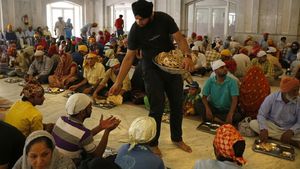 Baisakhi 2026: How Harvest Turns Into Shared Meals Through The Langar Tradition
 -
 Homestyle Dal with Twist: The Ultimate Chana Dal Recipe
 -
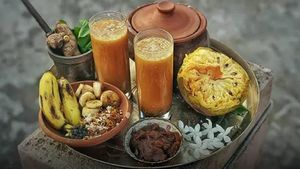 Pana Sankranti 2026: Why This Odia New Year Is Rooted In Summer Survival Traditions
 -
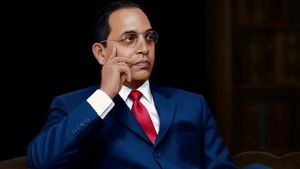 Ambedkar Jayanti 2026: 10 Thought-Provoking Quotes Marking Dr. B.R. Ambedkar’s 135th Birth Anniversary


Changing life's of Devdasis

Bangalore, Dec 3 (UNI) She was just nine, little did she know that her future will turn dark when her parents dedicated her to goddess Yellamma as a Devadasi in Bagalkot in Karnataka.
Eldest in the famiy of eight children, Kalavathy (name changed) was a graceful and articulate child, naughty and fun-loving like any other village lass. But her life changed after she was dedicated as a Devadasi. Trafficked into Maharashtra she was forced into sex work and was afflicted by the deadly HIV. Soon she realised that she cannot marry and has to lead a life different from others.
Hundreds of such women from poor families suffer today as Devadasis and later sex workers in Northern districts of Karnataka.
A young female is dedicated to the goddess as Devadasi, who in turn is exploited by the society.
After many twists and turns, ups and downs, the advent of HIV prevention programmes brought light into the life of this village girl once again. And many of these Kalavathys have found a platform to change not only their own lives but the lives of hundreds of villagers. Thanks to India-Canada Collaborative HIV/AIDS Project (ICHAP) introduced in Bagalkot.
Till 2002 the HIV prevention projects were concentrated in urban areas and responding to the trends showing the shift of HIV prevalence from urban to rural, National AIDS Control Organisation, the apex Government body in charge for the National Programme, selected Bagalkot as a Rural Demonstration Project and ICHAP began its work in four taluks of the backward district which was chalked out from a bigger Bijapur district in late nineties. Later on the project covered all the six taluks of the district.
ICHAP, instead of just concentrating on creating awareness about HIV prevention among high risk groups like female sex workers, worked with the general community on various socio-economic issues and spread its programme to the remote villages of the district. It also came together with Karnataka Network of People Living with HIV (KNP+) and helped start a network of People Living with HIV.
The efforts saw the emergence of Chaitanya Mahila Sangha, a collective for the sex workers and by the sex workers and also Jeevan Jyothi, a community-based organisation formed by people living with HIV. The realization that HIV prevention takes much more than just condom-promotion and awareness, the project went on to create linkages with the villages and helped these village folks build their capacities by inculcating in them the urge to improve their literacy, health and hygiene and started other empowerment programmes like forming sanghas and self-help groups to create a habit of savings.
Thus linkages to micro-credit and institutions such as banks were formed. They have also conducted several health clinics and awareness programmes to prevent the spread of Sexually Transmitted Infections. The stress was on building the socio-economic aspects which will bring about a complete change in the life style of the villagers rather than just dealing with the epidemic. The idea is to create an environment where they would be able to understand and tackle the spread of infection on their own.
About 30 STI clinics were established in all the taluks and they function at fixed time on fixed days and improving attendance here shows the rise in the health-seeking behaviour of the women.


 Continue with Google