




 Click it and Unblock the Notifications


Latest Updates
-
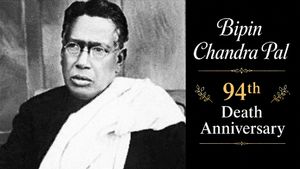 Remembering Bipin Chandra Pal On His 94th Death Anniversary With 10 Bold Quotes On Swaraj And Identity
 -
 'That Imposter Syndrome Is Always There' — Virat Kohli Just Said What Most High Achievers Won't Admit
 -
 Varada Chaturthi 2026: Significance, Puja Timings, Rituals And Why Devotees Avoid Seeing The Moon
 -
 Is Your Mango Safe To Eat? Seven Warning Signs To Check Before You Bite
 -
 Your Quick Energy Drink: The Ultimate Banana Shake Recipe
 -
 Horoscope for Today May 20, 2026 - Calm Energy, Steady Progress for All Signs
 -
 Spicy Home Style Chicken Masala Recipe: Your New Favorite Dinner
 -
 Who Is Abhijeet Dipke? The Man Behind India's Viral Cockroach Janta Party
 -
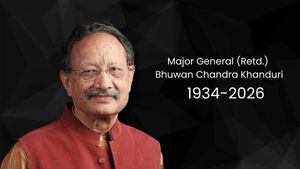 BC Khanduri, Former Uttarakhand CM and Army Veteran, Passes Away at 91
 -
 "Maa, Mujhe Yahan Se Lene Aa Jao": She Begged To Come Home, Nobody Came


Advaita Vedanta Explains Best About Love And Attachment


Love is definitely the most beautiful of all human emotions, an accepted opinion throughout. However attachment wears the mask of love and masquerade in one's relationships. An entire life time passes away without the revelation of the difference between love and attachment.
To understand the adulterated emotion off its imposition, there is but one means, a measuring stick that helps distinguish love from attachment. Rather a reflective means which simply exposes the fact that love liberates while attachment binds, an effective way of explaining love and attachment.
Attachment
Attachment brings about exclusion, a strong feeling directed towards one person. It invariably breeds the sense of possession. Possession demands the complete attention of the person on oneself. It generates pain and fear when the attachment is abnormally strong. Attachment can also trigger suffocation. Further more attachment is transitory. To cite an example, the feeling that one has for an individual at the beginning of a relationship does not stay the same way forever. Indifference sets in due course, the degree however varying in accordance with the adulteration. Due to the attention being focused on one person at the exclusion of others, the binding also engenders bitterness and misunderstanding with the others. A realisation of this helps one to understand love and attachment as two different things.
Love
Love is all inclusive and hence all embracing both good and bad. It is vast and hence suffuses an air of freedom. The liberating facet of the pure emotion should not be misunderstood with a freedom that goes hay-wire bringing about destruction. Anything that brings about destruction cannot be called pure. It is rather a freedom that enables one to live and let live without harm, within the seeming fence of right living. It breeds patience and forbearance. Hence it nurtures relationships. It sees things afresh. It is alive and spontaneous.
One may however question the existence of such a pure emotion. The doubt simply shoots up owing to one's attitude of taking it for granted, “Life is like that!" A little care and reflection can bring about the pureness in the emotion.
Pure love in the Advaita Vedanta way
Advaita Vedanta distinguishes love from attachment.
1.Vedanta claims that love in its true sense is all inclusive, for only such a kind of feeling can be accommodating.
2.All inclusiveness is bound to spring up only with the disappearance of separate existence (a distinct individual) which is the source of binding, selfishness, possession, suspicion etc. With separate existence there is no way for selflessness, patience and forbearance.
3.To extend total love to another, one will have to become that very person. That is what Jesus means by “Love thy neighbour as thy self"
4.It is a matter of fact, an undeniable truth that one loves oneself more than anybody else whom he claims to love more than himself. To become that very person, one will have to lose his separate existence to universal oneness. One cannot lose his sense of separate existence for his family alone. Either one will have to dissolve it once for all in universal oneness or continue to go about with it.
5.Advaita Vedanta points out that to lose one's sense of individuality, one will just have to realise one's oneness with the spirit, the essence, the common factor pervading the disparate forms.
6.The spirit as we normally think, cannot be different for each other which simply has its base from the wrong notion of “I am a separate being!," owing to the difference in forms and names. The spirit is formless hence we are much above the petty distinctions that we entertain and ascertain owing to name, form, colour, nationality etc.
7.The spirit or the Atman is one unifying force , the realisation of which brings about universal oneness. The expression of universal oneness is pure unalloyed love.
A person who realises this is enlightened, he who has discovered the way of blissful living. Such a person, even in a family leads a normal life carrying out his responsibilities with a cool head. To him love is eternal being and not merely binding.

 Continue with Google