




 Click it and Unblock the Notifications


Latest Updates
-
 The Dhaba Secret Paneer Lababdar Recipe: A Creamy Delight
 -
 “Authenticity Matters More Than Perfect Pictures”, Indian Artist Namrata Lodaya On Cannes 2026 Experience
 -
 Stroke Center: Why Expert Emergency Brain Care Can Change Recovery Outcomes
 -
 This Odisha Farmer Grows The World’s Most Expensive Mango, Worth Almost The Price Of Gold!
 -
 A New Era in Surgical Precision: Exploring Da Vinci (Single Port) Robotic Surgery
 -
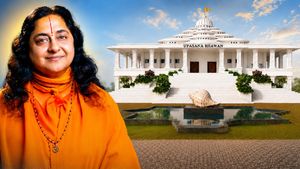 Who Is Raseshwari Devi Ji? Spiritual Leader Driving Odisha’s 1,500+ Seat Meditation And Yoga Centre Project
 -
 OTT Releases This Week (May 18–24): What’s New On Netflix, JioHotstar, Prime Video, Zee5 And More
 -
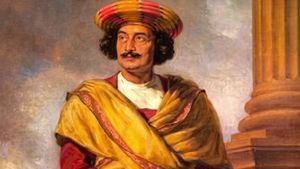 Raja Ram Mohan Roy’s 254th Birth Anniversary: 10 Powerful Quotes Of The ‘Father Of Indian Renaissance’
 -
 6 Foods You Shouldn't Overeat With Mangoes This Season
 -
 Horoscope for Today May 22, 2026 - Practical Choices, Steady Progress


Guru Gita - Part III

Guna (Attributes) Standpoint:
The letter' gu' indicates that the guru is beyond the three guna of Sattva, Rajas and Tamas, while 'ru' indicates that he is beyond all forms. Being free of guna and forms, he is called guru. (I :46)
The letter 'gu' shows that the guru is beyond all qualities and attributes. He is beyond sattva, rajas and tamas, meaning that he is verily Brahman. He is also beyond all forms (rupa). The guru is devoid of name, form, qualities or imperfections. One who has realized his Brahma svarupa is a guru.
I bow to that Sadguru who is the bestower of supreme happiness, the bliss of Brahman, who is the very embodiment of Knowledge, One without a second, who is beyond the pairs of opposites, all pervasive like the sky, the goal indicated by the mahavakya like tat-tvam-asi, the one eternal pure unchanging witness of all the thoughts in the intellect, who is above all mental conditions, beyond the three guna (sattva rajas and tamas).
The above verse (Guru Gita, I: 111) is a comprehensive salutation to the guru that again emphasizes how the guru rises above all realms of distinction. The bliss of his Being is not conditioned by any pair of opposites (dvandvatitam) and by this very qualification, the guru leaves behind the world of name, form, and quality. He is of the nature of the One alone, without a second - kevalam. It then follows that the guru has the all pervasive and all inclusive nature. The very contemplation of the guru as this 'Pure, Changeless Witness' then enables a student to envision how the guru stands apart from any conditioning or the apparent play of the guna.
To be continued
About the author
Swami Tejomayananda, the Chairman and spiritual head of Chinmaya Mission worldwide, is one of the foremost disciples of Swami Chinmayananda. He is an outstanding teacher of Vedanta and an accomplished poet, author, and composer.

 Continue with Google