




 Click it and Unblock the Notifications


Latest Updates
-
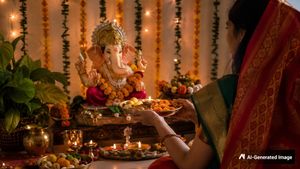 Varada Chaturthi 2026: Significance, Puja Timings, Rituals And Why Devotees Avoid Seeing The Moon
 -
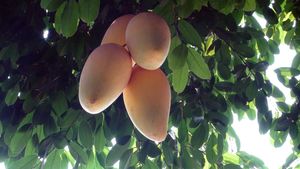 Is Your Mango Safe To Eat? Seven Warning Signs To Check Before You Bite
 -
 Your Quick Energy Drink: The Ultimate Banana Shake Recipe
 -
 Horoscope for Today May 20, 2026 - Calm Energy, Steady Progress for All Signs
 -
 Spicy Home Style Chicken Masala Recipe: Your New Favorite Dinner
 -
 Who Is Abhijeet Dipke? The Man Behind India's Viral Cockroach Janta Party
 -
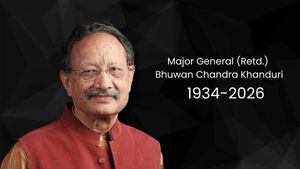 BC Khanduri, Former Uttarakhand CM and Army Veteran, Passes Away at 91
 -
 "Maa, Mujhe Yahan Se Lene Aa Jao": She Begged To Come Home, Nobody Came
 -
 Nachos Recipe: Your Go-To Crunchy Party Snack
 -
 Hacks 101: How To Save Your Makeup When It Starts to Melt


Vishnusahasranama-The Thousand Names Of Lord Vishnu


Jokes apart, the chanting of the names of the chosen Ishta Devata is an integral part of worship and spiritual practices in India. We often come across priests in temples performing the smaller compact version of the archana, chanting the 108 names of the deity (ashtottaram).
Why should we chant the names of Bhagavan? In fact, this practice of singing in praise of the Lord is an easy weapon in the hands of irrational atheists who claim that our gods are egoistic in demanding that they be praised by the devotees. What a childish notion!
When these names of the Lord are chanted with devotion and with proper understanding of their meaning, the chanting becomes a contemplation on the qualities of Bhagavan and thus helps in purifying and concentrating the mind.
Our scriptures lay great emphasis on 'Nama Sankirtana' by extolling it as the best and the highest spiritual practice for the Kali Yuga:
"Dhyana (meditation) in the Satya Yuga, Yajna (Sacrifices) in the Treta Yuga, Archana (puja) in the Dwapara Yuga and Sankirtana (singing in praise) of Keshava in the Kaliyuga are the prescribed practices." (Vishnu Purana 6.2.17)
The reason for this classification is not hard to find. The Rishis noticed that the capacity of the human mind for rigorous spiritual practices underwent a decline with the passage of time. Also, certain materials needed for external worship as prescribed in the Vedas, become more difficult to procure with the advance of materialistic civilization and the decline of natural resources. Sankirtana is easy to perform and demands neither of the above. So, there for the people of this age, it is considered the easiest and the best form of spiritual practice.
There are many Sahasranamas in vogue, like the Lalita sahasranama, Shiva Sahasranama etc, almost every deity of the Hindu pantheon has a sahasranama stotra associated with its worship. Not only the traditional pantheon but it is interesting to note that the disciples of the Sri Ramakrishna Paramahamsa composed a 'Ramakrishna Sahasranama Stotra' in his praise for they believed him to be the incarnation of Vishnu!
;

 Continue with Google