




 Click it and Unblock the Notifications


Latest Updates
-
 International Tea Day 2026: Here's What Drinking Tea First Thing In The Morning Does To Your Gut
 -
 Horoscope for Today May 21, 2026 - Curiosity Rises, Plans Shift
 -
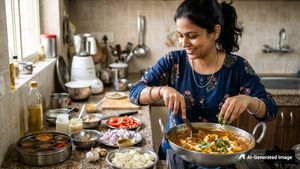 Paneer Lababdar Recipe: Creamy Restaurant-Style Curry Made Easy
 -
 Mouni Roy’s Cannes 2026 Patola Gown Took 300 Hours To Craft — The Story Of Gujarat’s GI-Tagged Weave
 -
 Bread Pizza Recipe: Your Instant Snack Hack
 -
 India's Hottest City Hit 47.6°C Today — This Is What Heatstroke Looks Like
 -
 Exclusive: Rubina Dilaik Said Yes To The Ward In Seconds: Here's The Raw Truth Behind Why
 -
 PM Modi Turns Viral ‘Melodi’ Nickname Real With Melody Gift To Meloni, Inside India’s Iconic Toffee Origin
 -
 Superglue, A Potato, A Plastic Bag: The Dangerous DIY Contraception Cases That Shocked Doctors
 -
 One Pot Easy Meal: Delicious Veg Pulav Recipe


Tapas (Austerity)

Of the divine qualities mentioned in the 16th chapter of the Bhagavad Gita, tapas or austerity is one of the most important. Here, I am not following the same sequential order as mentioned in the Gita in enumerating these qualities. Abhayam (fearlessness) is in fact the first quality mentioned in the opening verse, but I am taking the liberty of changing the order for the sake of convenience and flow.
I have chosen tapas to begin with because it is a profound idea; the foundation on which all the other divine qualities can be acquired. Without tapas, there can be no growth either in spiritual or worldly life.
Tapas is any form of discipline which involves control of the body, sense organs or the mind with a one-pointed focus on achieving a desired result. For example, a student who is preparing for an entrance examination is also performing tapas, in his own way. He has to spend many hours pouring over his reference books and solving problems by cutting down on other distractions. Any achievement or success in life is obtained only through such intense and focussed effort.
The idea of tapas is deeply ingrained into the fabric of Indian culture and every Indian boy or girl who has a basic awareness of his /her culture will understand it intuitively. It may be translated imperfectly into English language as austerity or penance but the cultural context is lost in the translation.
Women, girls and especially mothers in India will understand better what tapas is, because they practice it almost everyday - the various vows which they undertake on Tuesdays, Friday, Saturdays etc. involving fasting, prayer and pilgrimage are all different forms of tapas. Managing a family without losing one's sanity is perhaps the most difficult form of tapas for all Indian mothers!

 Continue with Google