




 Click it and Unblock the Notifications


Latest Updates
-
 Varada Chaturthi 2026: Significance, Puja Timings, Rituals And Why Devotees Avoid Seeing The Moon
 -
 Is Your Mango Safe To Eat? Seven Warning Signs To Check Before You Bite
 -
 Your Quick Energy Drink: The Ultimate Banana Shake Recipe
 -
 Horoscope for Today May 20, 2026 - Calm Energy, Steady Progress for All Signs
 -
 Spicy Home Style Chicken Masala Recipe: Your New Favorite Dinner
 -
 Who Is Abhijeet Dipke? The Man Behind India's Viral Cockroach Janta Party
 -
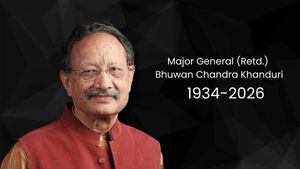 BC Khanduri, Former Uttarakhand CM and Army Veteran, Passes Away at 91
 -
 "Maa, Mujhe Yahan Se Lene Aa Jao": She Begged To Come Home, Nobody Came
 -
 Nachos Recipe: Your Go-To Crunchy Party Snack
 -
 Hacks 101: How To Save Your Makeup When It Starts to Melt


Thirukkural-On Wealth-On Kingship-Kural 385


Vakuthalum valladhu arasu.
A great king will be able to acquire wealth, develop and guard it;
For equitable distribution on State expenditure and public good.
A good king acquires wealth in many ways. 'Iyatralum' stands for all these methods of creation of wealth, not alone through legitimate taxes. Naturally it refers to the production of agriculture as well as mineral and other wealth on a wide front, and the royal income accruing from all these. One particular commentator mentions heirless estate as a possible source, but this would be rare. It refers also to victory over other kings inimical to him, and the consequential tributes secured from then in cash and kind (Kural 756, quoted under Kural 381).
The next steps are the consolidation and investment in ways that develop these resources, while ensuring effective protection of this wealth. Obviously Valluvar envisaged not only keeping all the king"s money safe in the treasury, but also the meaningful and productive investment of such resources. This idea may not be construed merely as ensuring greater returns from royal lands, or state enterprises, but more by promotion of private enterprises, by which the taxable capacity of the citizen may be increased.
The final step is the effective and equitable distribution of this wealth, to meet all the State"s expenditure and the Citizen"s legitimate needs. The concept of distribution, therefore, of the State"s wealth was not a new one introduced into the polity of world states by the modern welfare-state oriented specialists alone.
Parimel Azhagar, the prince among Valluvar"s commentators, would divide the channels of such distribution, into three: (i) Defence, (ii) Public works and (iii) Social Services, all three of which would cover legitimate public expenditure for distribution.
In delineating these four economic duties of the king in this Kural, it is obvious that Valluvar has come nearer to the views of Adam Smith, than of Plato or Kautilya. In his own way, Valluvar has postulated in so many words the democratic basis of society, side by side with the economic freedom of the individual, in the pursuit of his best interests, in a context that will also contribute to the discerning interests of the king himself (i.e) of the state as a whole.
Even in the modern State of today, budgeting process involving revenue and expenditure, could be considered satisfactorily poised, only if these kingly duties relating to the economy are effectively borne in mind.

 Continue with Google