




 Click it and Unblock the Notifications


Latest Updates
-
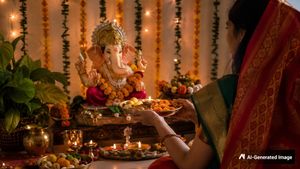 Varada Chaturthi 2026: Significance, Puja Timings, Rituals And Why Devotees Avoid Seeing The Moon
 -
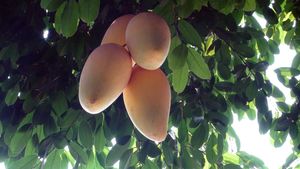 Is Your Mango Safe To Eat? Seven Warning Signs To Check Before You Bite
 -
 Your Quick Energy Drink: The Ultimate Banana Shake Recipe
 -
 Horoscope for Today May 20, 2026 - Calm Energy, Steady Progress for All Signs
 -
 Spicy Home Style Chicken Masala Recipe: Your New Favorite Dinner
 -
 Who Is Abhijeet Dipke? The Man Behind India's Viral Cockroach Janta Party
 -
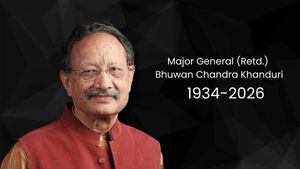 BC Khanduri, Former Uttarakhand CM and Army Veteran, Passes Away at 91
 -
 "Maa, Mujhe Yahan Se Lene Aa Jao": She Begged To Come Home, Nobody Came
 -
 Nachos Recipe: Your Go-To Crunchy Party Snack
 -
 Hacks 101: How To Save Your Makeup When It Starts to Melt


The Advaitic Meaning In The Ramayana (Dasamukha)


Dasamukha does not mean having five heads on the right and another five on the left, with one neck in between. If it were so, think of the traffic jam and think what a calamity it would be if Ravana were to catch a cold. He would have to sneeze ten times in every round. Even to clear one nose is a terrible thing. What is meant here is that the five Gnanedriyas and the five Karmendriyas together constitute the Dasamukha. A totally extrovert man lives in the flesh, for the flesh, and by the flesh. It is the rule of the flesh. Such a man is a sensualist and a total extrovert.
Materially he can become great as did Ravana who ruled over a prosperous land, Lanka, Compared to this land, Ayodhya was under-developed and village-like with perhaps bullock-carts plying on the roads. While in Lanka the country boasted of the Pushapaka Viman, the herals of the age of space travel. In fact Lanka was so advanced that even at 8 o'clock in the mornings women folk were found drunk! What a situation!! Even present day Delhi or New York , has not developed to that extent. Drunks are rampant only in the evenings.
In Lanka, nobody worked, everybody was supported by the socialist government, and people from all over the world came to pay homage to Ravana, who was supremely powerful. ' But does materialism provide anything more than mere physical comfort? It is not a solution to the problem of life. Spiritual and cultural values alone can save the world. This idea is brought out in the Ramayana.
We all know that Sita was abducted and taken away, but look at the beauty of it. Valmiki decides that she should not more be a citizen of Aryavarta. She may be the consort ofRama, yet she does not deserve to continue to be a citizen of this hallowed and cultural land any longer. She will be given a place in Lanka, another island, no doubt very near, but altogether another land.
Even there she was exiled. We are all at this moment 'Sitas' in exile. Should we give in to sensua1ity? To gain back our original Ayodhya, what should we do? We should do exactly what Sita did. A modem girl in Sitas place would have said; "Rama was a nice man, no doubt! I can well remember him. But what can I do? Ravana, is constantly asking me. Let me cooperate with him.
The Dawn of Realisation
But not Sita. She realised she had fallen and to prevent a further fall, she firmly said 'No' to Ravana and remained in the garden under an Asoka tree. Soka means dukha, i.e sorrow, Asoka therefore means 'not dukba' (devoid of sorrow). You and I will have sorrows,but we do not recognize it. This, is the 'Asoka' state. Under the tree of nonrecognition of sorrow when we want to remain steadfast in character, we will doubt-less be tempted and put to a lot of strain. But in that Asoka attitude, we should remain steadfast, constantly remembering Rama.
Sita was constantly and vigorously thinking of Rama. And we cannot say that Rama did not respond. In the Ramayana, we will find that the scene is alternately changing - once Lanka is shown, the next moment Rama is shown in the jungle. This shows that there is a secret communication between them. The more intense Sita's cry, the more frenzied does Ram's search for her becomes. He weeps like an ordinary mortal, not because he is attached to her, but because of his longing to help a devotee.
Swami Chinmayananda's lectures were an outpour of wisdom. He introduced the Geetha Gnana Yagna. He wrote a lot of books on spirituality, commentaries to Vedantic texts, children books etc. He then started spreading His teachings globally.

 Continue with Google