




 Click it and Unblock the Notifications


Latest Updates
-
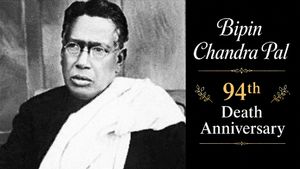 Remembering Bipin Chandra Pal On His 94th Death Anniversary With 10 Bold Quotes On Swaraj And Identity
 -
 'That Imposter Syndrome Is Always There' — Virat Kohli Just Said What Most High Achievers Won't Admit
 -
 Varada Chaturthi 2026: Significance, Puja Timings, Rituals And Why Devotees Avoid Seeing The Moon
 -
 Is Your Mango Safe To Eat? Seven Warning Signs To Check Before You Bite
 -
 Your Quick Energy Drink: The Ultimate Banana Shake Recipe
 -
 Horoscope for Today May 20, 2026 - Calm Energy, Steady Progress for All Signs
 -
 Spicy Home Style Chicken Masala Recipe: Your New Favorite Dinner
 -
 Who Is Abhijeet Dipke? The Man Behind India's Viral Cockroach Janta Party
 -
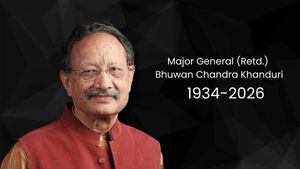 BC Khanduri, Former Uttarakhand CM and Army Veteran, Passes Away at 91
 -
 "Maa, Mujhe Yahan Se Lene Aa Jao": She Begged To Come Home, Nobody Came


Kabir-PartVII


In many of the teachings of Kabir one cannot miss the lofty message of Sri Ramakrishna expressed in almost the same language more than four centuries later. In fact, the similarities between Kabir and Sri Ramakrishna are astonishing. Both were near-illiterates. Both attained supreme illumination through yearning alone. Both taught in their own native tongue; not from scriptural learning but from the depth of their own realizations. Both preached the harmony of religions.
Both practised Hinduism and Islam. Both preached the essentials of religion rather than its externals. Both saw in man the manifestation of the Divine and hence preached equality of man and man, and man and woman. Both had followers from more than one religion, and both were originators of a powerful spiritual-social awakening. Both preached that Advaitic experience could be attained through pure and intense love of God. Both had great concern for the upliftment of the masses and the women, not only spiritually but also socially and economically. Both were hailed and worshipped as the highest manifestation of God as Guru by their followers.
Similarities between Kabir and Swami Vivekananda are also significant. Both of them wanted a 'root and branch' reform in the Indian society but on the basis of spirituality. Both preached morality as the foundation for all spiritual- life and progress. Both used a very strong language against oppressors and charlatans. Both upheld the need for a new approach and application of religion under the changed conditions of Indian society. Both preached Yoga to the masses along with Jnana and Bhakti. In fact, Swamiji spoke of Kabir as his ideal of 'reformation through spiritual upliftment.'
With such strong similarities between the 15th century celebrity and the two epochmakers of the 19th century India, it is but natural that the modern Indian feels attracted to the precepts of Kabir. A new hunger for pure spirituality has arisen all over the world and it cannot be satisfied by meaningless rituals or by the pseudo cults of 'Mahatmas' and 'Babas' and 'Matajis'. Kabir's life and message can supply us pure, refreshing spirituality, enabling us to love and serve God within and without
About the author
Swami Gautamananda Maharaj is the President of Ramakrishna Math Chennai, Tamil Nadu, India

 Continue with Google