




 Click it and Unblock the Notifications


Latest Updates
-
 The Dhaba Secret Paneer Lababdar Recipe: A Creamy Delight
 -
 “Authenticity Matters More Than Perfect Pictures”, Indian Artist Namrata Lodaya On Cannes 2026 Experience
 -
 Stroke Center: Why Expert Emergency Brain Care Can Change Recovery Outcomes
 -
 This Odisha Farmer Grows The World’s Most Expensive Mango, Worth Almost The Price Of Gold!
 -
 A New Era in Surgical Precision: Exploring Da Vinci (Single Port) Robotic Surgery
 -
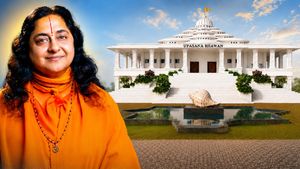 Who Is Raseshwari Devi Ji? Spiritual Leader Driving Odisha’s 1,500+ Seat Meditation And Yoga Centre Project
 -
 OTT Releases This Week (May 18–24): What’s New On Netflix, JioHotstar, Prime Video, Zee5 And More
 -
 Raja Ram Mohan Roy’s 254th Birth Anniversary: 10 Powerful Quotes Of The ‘Father Of Indian Renaissance’
 -
 6 Foods You Shouldn't Overeat With Mangoes This Season
 -
 Horoscope for Today May 22, 2026 - Practical Choices, Steady Progress


Never Mind The Mind-Part II


He illustrated it by adding "When we have a headache we immediately seek a cure for it, for health is natural and ill-health is unnatural. So we wish to get rid of it." Peace is the natural state of the mind in the same way as sound health is of the body. If we make our goal the tranquil mind undisturbed by activities performed and by situations in life, we would have opted not only for a practical goal but also for that which has been declared by Ramana to be the most natural one.
Let us assume that we are now clear about the goal. It is a mind which is always naturally restful irrespective of the circumstances. This very clarity gives one great strength for keeping at spiritual practices. The next quest is as to what is the best means of achieving this goal?
One finds that most of the persons who came to Ramana expressed diffidence and doubt about the feasibility of a restful mind amidst the pressures and pulls of daily life. With very little time available for meditation, and with constant family worries dogging, they are convinced that even this goal which means so much is beyond their grasp. The story which Ramana told one such devotee is fascinating and drives home the point that one should not sit on the sidelines but enter the fray and find out the truth.
The story narrated by Ramana in 1916 runs thus:
"A person who has never seen an ocean must make a trip to it to know about it. Standing there before the huge expanse of water, this person may wish to bathe in the sea. Of what use is it if, seeing the roaring and rolling of the waves, he were to just stand there thinking, 'I shall wait for all this to subside. When it does, I shall enter it for a quiet bath just as in the pond back home'? He has to realize either by himself, or by being told, that the ocean is restlessness from the moment of Creation and will continue likewise till Pralaya (destruction).
He will then resolve to learn to bathe in it as it is. He may wade into it by and by, and perhaps, through prior instruction, learn to duck under a wave and let it pass over him. He would naturally hold his breath while doing so. Soon he would be skilled enough to duck, at a stretch, wave after wave, and thus achieve the purpose of bathing without coming to grief. The ocean may go on and though in it, he is free from its grip… So too here."

 Continue with Google