




 Click it and Unblock the Notifications


Latest Updates
-
 Heatwave Alert: Why Your Phone and Laptop Are Overheating Right Now
 -
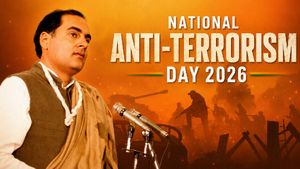 National Anti-Terrorism Day 2026: How Rajiv Gandhi’s Assassination Sparked A Nationwide Call For Peace
 -
 International Tea Day 2026: Here's What Drinking Tea First Thing In The Morning Does To Your Gut
 -
 Horoscope for Today May 21, 2026 - Curiosity Rises, Plans Shift
 -
 Paneer Lababdar Recipe: Creamy Restaurant-Style Curry Made Easy
 -
 Mouni Roy’s Cannes 2026 Patola Gown Took 300 Hours To Craft — The Story Of Gujarat’s GI-Tagged Weave
 -
 Bread Pizza Recipe: Your Instant Snack Hack
 -
 India's Hottest City Hit 47.6°C Today — This Is What Heatstroke Looks Like
 -
 Exclusive: Rubina Dilaik Said Yes To The Ward In Seconds: Here's The Raw Truth Behind Why
 -
 PM Modi Turns Viral ‘Melodi’ Nickname Real With Melody Gift To Meloni, Inside India’s Iconic Toffee Origin


Navratri-Importance Of Rituals And Spiritual Awakening


Not everyone, will be of the intellectual type to appreciate everything philosophically. Therefore, philosophy or spiritual truth must be demonstrated visually in some ritualistic form. In this way, when children are first introduced to it, they enjoy a dance or a festival, and then later on begin to question,
"What is this dance? Why are we doing this puja?
What is the meaning of Navratri?" So the purpose of the concretized ritual is fulfilled when these questions begin to arise in the children's minds.
Unfortunately, when we take our children to functions at the temples and they begin to ask questions about what they see(Importance of rituals), we cannot answer them. Yet when the children revolt later as teenagers, we say, "What happened to the children? These kids are terrible. We never used to question our religion!"
We take pride in the fact that we never used to question anything, but it would have been better if we had asked questions and found out. Why did we not ask? Because of intellectual inertia. Inertia is of different kinds. Physical inertia is not as bad because it is usually temporary.
There are also mental or emotional stupors that some people remain in, but the intellectual inertia is the worst kind because under its influence, we do not want to think at all. It is said that people can live without air for two minutes, without water for a few days, without food for a month or so, and without thinking for generations! Some people just do not want to think. This is our inner Mahisha, and our spiritual Mahisha is that we do not want to wake up from this sleep of ignorance.
Navratri Signifies Spiritual Awakening
As we can see, the theme of the entire Vedas is reflected in the Navratri festival: Purify the mind and remove all negativities; cultivate positive virtues; gain spiritual knowledge and transcend limitations. This is the real victory - the dance of joy - ritualistically performed at night, as it is on Shivaratri ( auspicious night), to signify our spiritual awakening.
Swami Tejomayananda
Swami Tejomayananda the Chairman and spiritual head of Chinmaya Mission worldwide, is one of the foremost disciples of Swami Chinmayananda. This article is an excerpt from His Navratri-Symbolic Significance . In this article Swamiji talks about the importance of rituals and spiritual awakening after having dealt with the significance of Goddess Saraswati worship during Navratri, significance of Goddess Lakshmi and significance of Goddess Durga, and the importance of Rasa dance in the previous articles.

 Continue with Google