




 Click it and Unblock the Notifications


Latest Updates
-
 Rich Home Style Masala Chicken Gravy Recipe
 -
 Viral IIT Baba Abhay Singh Secretly Marries Engineer Pratika, Netizens Question His Spiritual Path
 -
 Karishma Tanna and Husband Varun Bangera Share Pregnancy News With Fun Photoshoot, Call Baby ‘Little Miracle’
 -
 Why Women Leaders Are Crucial for Driving Change in India’s Healthcare Sector
 -
 Who Is Bhoomika Yadav? Meet Raipur’s 19-Year-Old, Youngest Indian Model To Walk For Chanel
 -
 Super Crispy Street Style Aloo Tikki Recipe: Your New Favorite Snack!
 -
 Baisakhi 2026: Date, History, Rituals and Cultural Significance Explained
 -
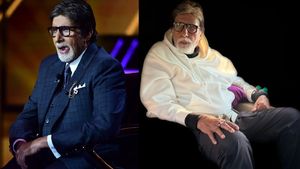 At 83, Amitabh Bachchan Finds Not Working Each Day Disturbing: Why Breaking Routine Triggers Anxiety
 -
 Alia Bhatt Serves Sharp, Subtle Drama in Gaurav Gupta’s Black Three-Piece Tuxedo
 -
 Boss Lady By Zlaata: Workwear That Made Confidence Visible


Sri Rama Avathar


From Guru to sishya, the Vedas were propagated for the welfare of subsequent generations. The Vedas are the root of Dharma and Dharma is the basis of the entire manifested world. The Vedas are the means of attaining the fourfold Purushartha - Dharma. Artha, Kama and Moksha. When Artha and Kama were based on Dharma. the human race following the Divine blue-print - the Vedic injunctions, lived a life of contentment and happiness and marched forward in its evolutionary pilgrimage to Godhood.
However, when we look at the spiritual history of the world, we noticed that it is not a perennial and an uneventful upward march to perfection but the journey is punctuated by periodical decadence followed by renaissance. This is neither the fault of the laws nor of the lawgiver as every failure and sorrow is normally attributed to human beings, the roof and crown of creation, unlike the animals which live by sheer instincts and impulses are bestowed with unique discriminating faculty, the intellect and also the "Choice of action" - the wise exercise of these helps them to live and act in harmony with Dharma and thereby progress towards the goal namely, liberation (Moksha) from their self-imposed entanglements.
Purushartha however involves the freedom of choice, man often falls a prey to the tantalizing temptations of the world, violates the laws by living an adharmic life and suffers the consequences - misery and sorrow - and reaches his doom, thereby retarding his evolutionary progress. When at any period of history, such violations become rampant and evil forces gain an upper hand reducing the people of that period to a state of utter helplessness, the law-giver manifests Himself amongst humanity and restores Dharma back to its pedestal as promised in the Bhagavad Gita.
"Arjuna, whenever righteousness is on the decline and unrighteousness is on the ascendant, then I manifest Myself"
I "For the protection of the virtuous, for the destruction of evil doers, and for establishing Dharma on a firm footing. I am born from age to age".
Thus the mighty, unlimited, supreme law-giver, the truth indicated in the Upanishads out of compassion for the erring masses and for giving them solace, descends as an Avatar and appears to be embodied and limited. In and through that role played by Him, He speaks and acts, blesses, inspires, guides and illumines humanity. Though the objects of the descent are : (1) the protection of the good. (ii) the destruction of the wicked and (iii) re-establishment of Dharma, the main purpose is the last which is Dharma-Samsthapana. The Lord, through His divine interference or descent apparently comes down to solve a topical problem of the age, the main aim being to leave behind eternal solutions. Avataar is the descent of the Lord for the ascent of man.
About the author
P.G.Ananthanarayan (Mani)
This article has been written by P.G.Ananthanarayan (Mani) for the Vedanta Vani of Chinmaya Mission.


 Continue with Google