




 Click it and Unblock the Notifications


Latest Updates
-
 Horoscope for Today May 21, 2026 - Curiosity Rises, Plans Shift
 -
 Paneer Lababdar Recipe: Creamy Restaurant-Style Curry Made Easy
 -
 Mouni Roy’s Cannes 2026 Patola Gown Took 300 Hours To Craft — The Story Of Gujarat’s GI-Tagged Weave
 -
 Bread Pizza Recipe: Your Instant Snack Hack
 -
 India's Hottest City Hit 47.6°C Today — This Is What Heatstroke Looks Like
 -
 Exclusive: Rubina Dilaik Said Yes To The Ward In Seconds: Here's The Raw Truth Behind Why
 -
 PM Modi Turns Viral ‘Melodi’ Nickname Real With Melody Gift To Meloni, Inside India’s Iconic Toffee Origin
 -
 Superglue, A Potato, A Plastic Bag: The Dangerous DIY Contraception Cases That Shocked Doctors
 -
 One Pot Easy Meal: Delicious Veg Pulav Recipe
 -
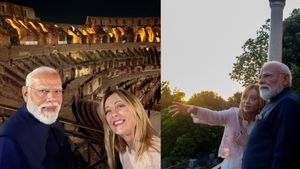 'Melodi' Moment Breaks The Internet: PM Modi Meets Giorgia Meloni In Rome, Colosseum Diplomacy Explained


Savitribai Phule's 189th Birthday: 11 Facts About The Reformist And India's First Female Teacher

Savitribai Phule, India's first woman teacher and the headmistress was born on 3 January 1831 in Satara, Maharashtra. Born to Lakshmi and Khandoji Neveshe Patil, Savitribai was a poet, educationalist and social reformer. Savitribai was barely nine years old when she was married to Jyotirao Phule who himself was thirteen years old at the time of marriage.

She was among those people who fought for eradicating evil practices against women. Let's talk about some facts about this social reformer of the 19th century.
1. At the time of her marriage, Savitribai Phule wasn't educated. This is because, during those times, people belonging to lower castes were not allowed to receive education. Moreover, due to the conservative mindset, people thought women must not be educated.
2. Her Husband, Jyotirao Phule was determined to educate her and hence, he started teaching her. He made sure that Savitribai Phule becomes capable of teaching other women too.
3. After completing her education and training as a teacher, Savitribai went ahead to teach young girls in Maharwada, Pune. She then also worked with Sagunabai, another reformist and the mentor of Jyotirao Phule.
4. Savitribai composed many poems that usually conveyed the importance of educating women. Being a social reformer, she set up various programmes and schools for girls. The credit for establishing the first school for girls goes to Jyotirao Phule and Savitribai Phule.
5. Since the couple belonged to a marginalised caste of the society, they received backlashes from people supporting conservative views. In fact, the people would call the couple's good deed as 'evil practice' and used to throw stones and cow dung at Savitribai Phule on her way to school.
6. With the help of her husband and a few supporting aides, Savitribai opened 18 schools that provided education to children belonging to all caste, class and religion.
7. Savitribai opened Mahila Seva Mandal to bring awareness among the women and help them in realising their rights.
8. Her work also included encouraging widow remarriage and abolishing child marriage. In fact, she opened a shelter home, where Brahmin widows after being disowned by their family could give birth to their child and leave it for adoption if they agreed. In fact, she herself adopted a baby boy of Brahmin widow as she was childless.
9. Savitribai also worked for improving the medical condition of society. She opened a clinic on the outskirts of Pune where people suffering from the plague were treated.
10. She died of bubonic plague on 10 March 1897. She carried a boy who contracted the plague on her shoulder to the clinic. Meanwhile, she too caught the infection and finally died.
A memorial was created in her memory in the year 1983. It was on 10 March 1998, when a stamp was released in the honour of Savitribai Phule by the India Post.

 Continue with Google