




 Click it and Unblock the Notifications


Latest Updates
-
 Superglue, A Potato, A Plastic Bag: The Dangerous DIY Contraception Cases That Shocked Doctors
 -
 One Pot Easy Meal: Delicious Veg Pulav Recipe
 -
 'Melodi' Moment Breaks The Internet: PM Modi Meets Giorgia Meloni In Rome, Colosseum Diplomacy Explained
 -
 Remembering Bipin Chandra Pal On His 94th Death Anniversary With 10 Bold Quotes On Swaraj And Identity
 -
 'That Imposter Syndrome Is Always There' — Virat Kohli Just Said What Most High Achievers Won't Admit
 -
 Varada Chaturthi 2026: Significance, Puja Timings, Rituals And Why Devotees Avoid Seeing The Moon
 -
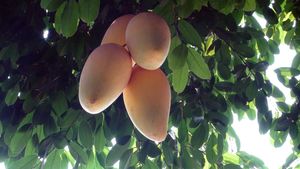 Is Your Mango Safe To Eat? Seven Warning Signs To Check Before You Bite
 -
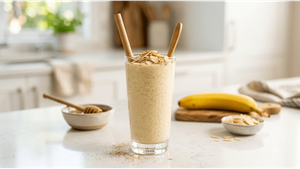 Your Quick Energy Drink: The Ultimate Banana Shake Recipe
 -
 Horoscope for Today May 20, 2026 - Calm Energy, Steady Progress for All Signs
 -
 Spicy Home Style Chicken Masala Recipe: Your New Favorite Dinner


Self-Cleaning Walls And Water Striding Robots For You!


There is a property called super hydrophobia that allows water to bead up and rolls off flowers, caterpillars and some insects. This property also allows insects like water striders to walk effortlessly on water.
The legs of the water striders are highly hydrophobic. Hydrophobic means water really doesn't like their legs and that's what keeps them on top. Moreover they can hold about 15 times their weight.
Caterpillars, water striders, and the lotus achieve super hydrophobia through a two-level structure — a hydrophobic waxy surface made super hydrophobic by the addition of microscopic hair-like structures that may be covered by even smaller hairs, greatly increasing the surface area of the organism and making it impossible for water droplets to stick.
Now, researchers at the University of Nebraska-Lincoln and Japan's RIKEN institute used the super fast supercomputer at RIKEN, the fastest in the world when the research started in 2005, to design a computer simulation to perform tens of thousands of experiments that studied how surfaces behaved under many different conditions. They used the supercomputer to "rain" virtual water droplets of different sizes and speeds on surfaces, which had pillars of various heights and widths and different amounts of space between the pillars.
The researchers observed that there was a critical pillar height, depending on the particular structure of the pillars and their chemical properties, beyond which water droplets cannot penetrate. If the droplet can penetrate the pillar structure and reach the waxy surface, it is in the merely hydrophobic Wenzel state, named for Robert Wenzel, who found the phenomenon in nature in 1936. If it the droplet cannot penetrate the pillars to touch the surface, the structure is in the super hydrophobic Cassie state, named for A.B.D. Cassie, who discovered it in 1942, and the droplet rolls away.
This kind of simulation - we call it 'computer-aided surface design' - can really help engineers in designing a better nanostructured surface. In the Cassie state, the water droplet stays on top and it can carry dirt away. In the Wenzel state, it's sort of stuck on the surface and lacks self-cleaning functionality. When you build a nanomachine - a nanorobot - in the future, you will want to build it so it can self-clean.
A research paper describing the study has been published in the online edition of the Proceedings of the National Academy of Sciences.

 Continue with Google