




 Click it and Unblock the Notifications


Latest Updates
-
 Eid al-Adha 2026: Date, Moon Sighting, Significance, and the Story Behind the Festival
 -
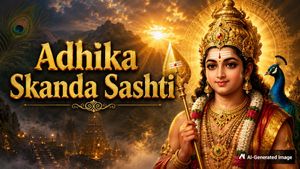 Skanda Sashti May 2026: Fasting Benefits, Puja Vidhi, and Murugan Mantra
 -
 Hyderabadi Style Chicken Masala Recipe: A Flavorful Lunch Delight
 -
 From Bigg Boss To Desi Bling — Karan And Tejasswi's Love Story Just Hit Its Biggest Moment
 -
 Piles In Summer: Here's Why It Happens And What You Can Do About It
 -
 Healthy 5 Minute Breakfast: Creamy Avocado Banana Smoothie Recipe
 -
 Heatwave Alert: Why Your Phone and Laptop Are Overheating Right Now
 -
 National Anti-Terrorism Day 2026: How Rajiv Gandhi’s Assassination Sparked A Nationwide Call For Peace
 -
 International Tea Day 2026: Here's What Drinking Tea First Thing In The Morning Does To Your Gut
 -
 Horoscope for Today May 21, 2026 - Curiosity Rises, Plans Shift


150 Years of Vande Mataram to Define Republic Day 2026: Everything You Should Know

Every Republic Day carries its own symbolism, flags, parades, young marchers in crisp uniforms, and the echo of Jana Gana Mana rising across Kartavya Path. But this year, there's a deeper rhythm behind the celebrations. It is associated with the 150th anniversary of the iconic Vande Matram, a song that has become synonymous with the freedom struggle of our nation.
From the Pen of a Novelist to the Heart of a Nation

Vande Mataram wasn't born on a battlefield or at a political meeting. It began as a poem by Bankim Chandra Chattopadhyay in the 1870s, written in Sanskritised Bengali and first published on 7 November 1875 in the literary journal Bangadarshan.
Later woven into his novel Anandamath (1882), the song's refrain, literally meaning "I bow to thee, Mother," captured a powerful sentiment: love for the land personified as a nurturing, sacred mother figure.
A Song That Stirred a Movement
Vande Mataram had captured the heart of the masses in the country long before the formation of a republic in India. The emotive content of the song had already found favour in the early 20th century among the Indian National Congress as a rallying slogan against colonial oppression.
The song's influence was so potent that the British colonial government banned its public recitation in schools under threat of punishment, yet people defied that ban, singing it again and again as an act of resistance.
Thus, by the time India had become a republic in 1950, Vande Mataram had gained recognition as the National Song of the Republic of India with equal prominence to Jana Gana Mana.
Why 2026 Is Special: 150 Years of an Iconic Song

Republic Day 2026 isn't just the usual celebration of the Constitution coming into force in 1950; it's also a cultural milestone. For the first time, the Republic Day parade theme is centred on the 150 years of Vande Mataram, making India's annual civic celebration also a tribute to the song's endurance and impact.
From 19 to 26 January, performances inspired by Vande Mataram will unfold across the country, blending music, tableau art, and patriotic expression. Paintings from the 1923 Bande Mataram Album, depicting the song's verses, will be displayed along parade routes. Floral arrangements, band performances, and even army formations would promote and portray this theme.
The Cultural Pulse: More Than Just Melody
What makes Vande Mataram resonate even 150 years later isn't just its melody or poetry, but the conviction that at its root is an "underlying ideological thread, unity and pride in the nation and its land, respect for the motherland, and the bold spirit to imagine freedom from the distance associated with the feature of the day."
In recent commemorations, leaders have continued to stress the association between the past and the present. They have emphasised how the song has served as a source of unity in the struggle towards freedom and how it continues to remind people of the deep cultural roots of the people of India.
A National Moment That Hooks Generations
Whether it's students singing in unison, military bands interpreting its verses, or massive paintings lining Kartavya Path, the celebration of Vande Mataram's 150th anniversary offers India a unique way to reflect on its story, where poetry became resistance, and devotion became national pride.
This Republic Day, Vande Mataram is more than a song at a parade. It reminds us how emotions, culture, and identity have shaped India, and how its message still lives in our hearts.

 Continue with Google