




 Click it and Unblock the Notifications


Latest Updates
-
 National Anti-Terrorism Day 2026: How Rajiv Gandhi’s Assassination Sparked A Nationwide Call For Peace
 -
 International Tea Day 2026: Here's What Drinking Tea First Thing In The Morning Does To Your Gut
 -
 Horoscope for Today May 21, 2026 - Curiosity Rises, Plans Shift
 -
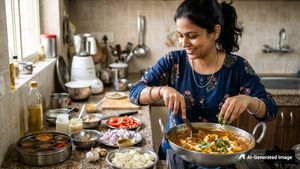 Paneer Lababdar Recipe: Creamy Restaurant-Style Curry Made Easy
 -
 Mouni Roy’s Cannes 2026 Patola Gown Took 300 Hours To Craft — The Story Of Gujarat’s GI-Tagged Weave
 -
 Bread Pizza Recipe: Your Instant Snack Hack
 -
 India's Hottest City Hit 47.6°C Today — This Is What Heatstroke Looks Like
 -
 Exclusive: Rubina Dilaik Said Yes To The Ward In Seconds: Here's The Raw Truth Behind Why
 -
 PM Modi Turns Viral ‘Melodi’ Nickname Real With Melody Gift To Meloni, Inside India’s Iconic Toffee Origin
 -
 Superglue, A Potato, A Plastic Bag: The Dangerous DIY Contraception Cases That Shocked Doctors


5 Healthy Indian Food Combinations That Can Support Weight Loss

Weight loss does not have to mean giving up on tasty food or surviving on bland meals. In fact, many Indian dishes naturally combine fibre, protein, healthy fats, and essential nutrients that can help keep you full and support healthy weight management. The key lies in choosing balanced food combinations that satisfy cravings without overloading on calories. From comforting dal and raita to wholesome upma and yoghurt, here are five delicious Indian food pairings that can fit well into a weight-loss-friendly diet.
Here are five Indian food combos that are perfect for weight loss:

1. Dal and vegetable raita
Combining protein-rich dal with a low-calorie vegetable raita makes for a nutritious meal that's low in calories and high in fibre. This meal is a great way to get a combination of essential vitamins and minerals that are necessary for good health [1].
The protein in the dal helps to build muscle, while the vegetable raita provides a healthy dose of fibre which helps to regulate digestion.
2. Coconut chutney and paratha
Coconut chutney is full of healthy fats and fibre, and when served with a whole wheat paratha, it makes for a filling and nutritious meal. Coconut chutney contains a variety of nutrients, including healthy fats like medium-chain-triglycerides (MCTs) and fibre [2].
The whole wheat paratha adds carbohydrates and protein, making it a balanced meal that is both filling and nutritious.
3. Aloo gobi and chapati
Aloo gobi is a classic Indian dish that is low in fat and high in fibre. Combined with a chapati, it's an excellent weight loss meal because it is a balanced meal that is low in calories and packed with nutrients. The aloo gobi is a vegetable-based dish that is rich in fibre, which helps to fill you up faster and keep you full for longer.

The chapati is a whole-grain flatbread that is low in fat and provides a good source of complex carbohydrates [3].
4. Vegetable pulao and raita
This combination is full of vitamins and minerals and is low in calories. The rice provides carbohydrates, while the raita provides a low-fat, low-calorie protein source. This combination is beneficial because the rice provides energy, while the raita is a source of essential vitamins and minerals that are necessary for a healthy diet.
Additionally, the low-calorie and low-fat content makes it a great choice for those looking to lose or maintain weight.
5. Vegetable upma and yoghurt
Upma is a savoury dish made with semolina and vegetables. When combined with a serving of yoghurt, it makes for a nutritious and filling meal that's low in calories and fat. It can also be eaten as a snack or for breakfast [4]. It's easy to make and can be prepared in less than 30 minutes.

On A Final Note...
These five Indian food combos are, without a doubt, full of flavour, fibre, and vitamins, and are low in calories and fat, so you can enjoy them guilt-free, all the while losing some weight in the healthiest way possible.
Make sure to add in a healthy dose of exercise and sleep schedule as well.
Disclaimer: The information provided in this article is for general informational and educational purposes only and is not intended as a substitute for professional medical advice, diagnosis, or treatment. Always seek the advice of your physician or a qualified healthcare provider with any questions you may have regarding a medical condition.

 Continue with Google