




 Click it and Unblock the Notifications


Latest Updates
-
 Varada Chaturthi 2026: Significance, Puja Timings, Rituals And Why Devotees Avoid Seeing The Moon
 -
 Is Your Mango Safe To Eat? Seven Warning Signs To Check Before You Bite
 -
 Your Quick Energy Drink: The Ultimate Banana Shake Recipe
 -
 Horoscope for Today May 20, 2026 - Calm Energy, Steady Progress for All Signs
 -
 Spicy Home Style Chicken Masala Recipe: Your New Favorite Dinner
 -
 Who Is Abhijeet Dipke? The Man Behind India's Viral Cockroach Janta Party
 -
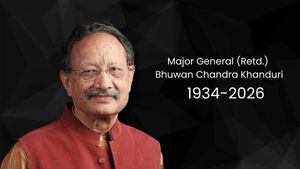 BC Khanduri, Former Uttarakhand CM and Army Veteran, Passes Away at 91
 -
 "Maa, Mujhe Yahan Se Lene Aa Jao": She Begged To Come Home, Nobody Came
 -
 Nachos Recipe: Your Go-To Crunchy Party Snack
 -
 Hacks 101: How To Save Your Makeup When It Starts to Melt


From 135 kg to 89 kg: How Nitin Gadkari’s Post-COVID-19 Wake-Up Call Redefined His Health

Fat to Fit is not about appearance; it's about reclaiming health.
For years, Hon'ble Union Minister Shri Nitin Gadkari lived the kind of life many high-functioning leaders do: packed schedules, endless responsibilities, and little room for personal well-being. Health, by his own admission, came last. That changed after COVID.
On the Master's Union Series C podcast, hosted by Pratham Mittal, Gadkari spoke candidly about his health transformation, one that saw him lose 46 kilos, going from 135 kg to 89 kg, and rebuild a daily discipline around movement, pranayam, and consistency.
As part of our Fat to Fit campaign, we trace Nitin Gadkari's journey of losing 46 kg after COVID and the mindset shift that made health his top priority.
"I had a very unplanned, undisciplined life. Undisciplined? Absolutely," he said. "After Covid, I exercise for two to two and a half hours daily. I did it today as well."
What stands out in Gadkari's story is not just the scale of weight loss, but the clarity with which he frames the shift: health became non-negotiable.
When COVID Forces a Pause
For many Indians, the pandemic acted as a reckoning. Studies published in The Lancet and BMJ Global Health have shown that individuals with obesity and metabolic conditions faced higher risks of severe COVID outcomes, longer recovery times, and complications. COVID didn't just expose vulnerabilities; it forced people to confront them.
For Gadkari, the turning point was deeply personal. "During COVID, my friends who were with me passed away. Then I felt I had to change," he shared.
This aligns with behavioural research that shows health shocks, such as illness or the loss of peers, are among the strongest motivators for long-term lifestyle change, often more effective than preventive advice alone.
"Health Is Wealth" - Not Just a Slogan
"You will be surprised, my weight was 135 kilos. Now I am 89... I have lost 46 kg," Gadkari said, adding, "If your health is not good, the rest of the things are meaningless."
Medical research supports this perspective. According to the World Health Organization, obesity significantly increases the risk of heart disease, diabetes, joint disorders, sleep apnea, and reduced life expectancy. In India, central obesity is rising even among people who appear otherwise active or professionally successful.
Weight loss of even 5-10% has been shown to improve blood pressure, insulin sensitivity, mobility, and energy levels. Gadkari's transformation impacts far more than this and highlights the ability of charted exercises to reverse the metabolic stress suffered for years.
Discipline Over Shortcuts

When asked about yoga, Gadkari explained that his routine focuses on stretching, strengthening, and guided training, supported by a teacher. His emphasis was not on trends or extremes, but consistency.
"Now, many people tell me that day by day you are becoming younger," he said. "It is because of my pranayam and the exercise I do."
This supports the perspective of exercise science, which emphasises the importance of movement in a healthy lifestyle instead of its intensity. Studies by the American College of Sports Medicine indicate that the performance of moderate to vigorous physical activity on a daily basis can enhance cardiovascular function, muscle strength, and even the functioning of the brain, especially in the elderly.
A Message for the Next Generation
Perhaps the most powerful part of Gadkari's story is his honesty about regret.
"Give the first priority to your health. I have made a mistake. It is very necessary," he said, recalling advice from his mother: First look at yourself.
This resonates strongly in a country where long working hours, sedentary lifestyles, and delayed self-care are often normalised. Data from the NFHS shows an alarming rise in the numbers of young and young adult obese individuals, many of whom feel their health needs can be "fixed later."
But as Gadkari's story reminds us, later often comes with consequences.
Bottomline
Gadkari's Fat to Fit journey isn't about aesthetics or public validation. It's about regaining control, acknowledging vulnerability, and choosing discipline over neglect.
Fat to Fit is not about appearance; it's about reclaiming health.
In a culture that celebrates burnout as commitment, his story quietly challenges a dangerous norm: that success must come at the cost of well-being. Sometimes, the most powerful leadership decision is choosing to live longer, stronger, and healthier, not just for yourself, but for the people who depend on you.
Disclaimer: The information provided in this article is for general informational and educational purposes only and is not intended as a substitute for professional medical advice, diagnosis, or treatment. Always seek the advice of your physician or a qualified healthcare provider with any questions you may have regarding a medical condition.

 Continue with Google