




 Click it and Unblock the Notifications


Latest Updates
-
 Remembering Bipin Chandra Pal On His 94th Death Anniversary With 10 Bold Quotes On Swaraj And Identity
 -
 'That Imposter Syndrome Is Always There' — Virat Kohli Just Said What Most High Achievers Won't Admit
 -
 Varada Chaturthi 2026: Significance, Puja Timings, Rituals And Why Devotees Avoid Seeing The Moon
 -
 Is Your Mango Safe To Eat? Seven Warning Signs To Check Before You Bite
 -
 Your Quick Energy Drink: The Ultimate Banana Shake Recipe
 -
 Horoscope for Today May 20, 2026 - Calm Energy, Steady Progress for All Signs
 -
 Spicy Home Style Chicken Masala Recipe: Your New Favorite Dinner
 -
 Who Is Abhijeet Dipke? The Man Behind India's Viral Cockroach Janta Party
 -
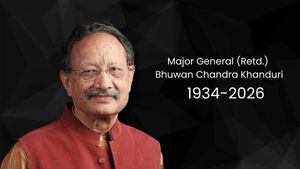 BC Khanduri, Former Uttarakhand CM and Army Veteran, Passes Away at 91
 -
 "Maa, Mujhe Yahan Se Lene Aa Jao": She Begged To Come Home, Nobody Came


'Natya Yoga' Or 'Dance Yoga'


Origin Of Natya Yoga
Bharata Muni was the first to write a guide on 'Natya Yoga' or 'Dance Yoga' and the first to learn this beautiful art was Sage Narada and the Gandharvas. It was also later learnt and performed during the Medieval period by the Devadasis(Temple dancers). At present Natya Yoga is being taught in conventional Bharatnatyam and Odissi dance schools.
Though incorporating the traditional static asanas or Yoga poses of Hatha Yoga and Pranayama in the preparation of the body, Natya Yoga extends more than just static poses involving certain dynamic exercises in rhythmic dance movements, as the name goes.
A Natya Yoga dancer also masters the 108 Karanas. A Karana is a unit of dance in which gesture, step and attitude are in perfect coordination revealing a harmonious rhythmic movement. Doing so the dancer gets to understand the intimate connections between the physical, emotional and mental bodies.
Natya Yoga and Spirituality
The practitioners are also encouraged to learn 'Carnatic music' as its 'Raagas' are supposed to awaken and elevate the body consciousness, a transcendental state.
Karma Yoga: Natya Yoga contains in itself the essence of Karma Yoga, to not to be attached to the fruits of actions. A Natya Yogi is trained to gain control of different aspects of his nature and apply it in day to day life. In the course of training, the practitioner is exposed to situations where he/she is trained not to get attached to the fruits of actions, there by offering every thought, emotion and action as an offering to God.
Bakti Yoga: Offering thought, emotion and action to God, incorporated in 'Natya Yoga' would also mean surrender, the essence of Bakti Yoga or the path of devotion.
Jnana Yoga: Again being detached to the working of the mind, which means rising above the mind reveals the essence of Jnana Yoga or the path of Knowledge
Tantra: The Tantric approach to spirituality, is also found in Natya Yoga. Transformation of life without withdrawing from it happen to be the base of Natya Yoga bearing similarities to the path of Tantra, with its invocation practices, visualizations and stressing on establishing godhead and divine powers in the dancer.
Transformation is the focus not only in the life of the dancer but also with regards to the audience as well. Public performance of 'Dance Yoga' brings about this two fold effect.
Raja Yoga: The principles of meditation and concentration as in the Raja Yoga forms an integral part of 'Natya Yoga' without which the practice is highly impossible.
Natya Yoga Poses
Some of the Hatha Yoga poses that forms the basis for Dance Yoga are
Natarajasana (Dancing Shiva series)
Virabhadrasana (warrior pose)
Utkatasana series (Chair pose)
Ardha Chandrasana and more...
Benefits of Dance Yoga
A perfect Yogi is the one who is at home at all circumstances. He is neither an introvert nor an extrovert. He does not shun away from life. Living life is rather a 'Yoga' for him. He is perfectly at ease with both introversion and extroversion, rising above them as mere concepts. This is made possible with 'Dance Yoga' with its entertaining and meditative aspects. Further more with its vibrant aspect, Natya Yoga relieves one from emotional stress or tensions.
One of the greatest aspects of dance especially, Bharatnatyam, is its ability in controlling the mind. Single-minded contemplation is acquired, amidst continuous series of action with the feet keeping up with the time, hands expressing gestures, eyes coordinating with the hands, ears listening to the music, all in a spontaneous co-ordination. This brings about harmony in the most natural way. While engaged in it, the dancer experiences spiritual freedom, the ultimate freedom, while transforming the whole practice into a beautiful rendering.
Thus 'Natya Yoga' exposes one, whether it is the watcher or the dancer to the ultimate bliss of oneness, the end of all spiritual sadhanas.

 Continue with Google