




 Click it and Unblock the Notifications


Latest Updates
-
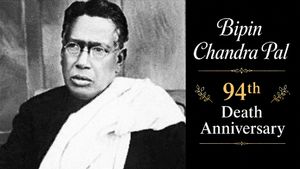 Remembering Bipin Chandra Pal On His 94th Death Anniversary With 10 Bold Quotes On Swaraj And Identity
 -
 'That Imposter Syndrome Is Always There' — Virat Kohli Just Said What Most High Achievers Won't Admit
 -
 Varada Chaturthi 2026: Significance, Puja Timings, Rituals And Why Devotees Avoid Seeing The Moon
 -
 Is Your Mango Safe To Eat? Seven Warning Signs To Check Before You Bite
 -
 Your Quick Energy Drink: The Ultimate Banana Shake Recipe
 -
 Horoscope for Today May 20, 2026 - Calm Energy, Steady Progress for All Signs
 -
 Spicy Home Style Chicken Masala Recipe: Your New Favorite Dinner
 -
 Who Is Abhijeet Dipke? The Man Behind India's Viral Cockroach Janta Party
 -
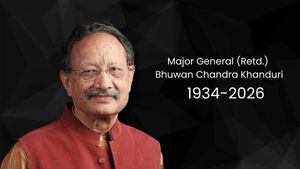 BC Khanduri, Former Uttarakhand CM and Army Veteran, Passes Away at 91
 -
 "Maa, Mujhe Yahan Se Lene Aa Jao": She Begged To Come Home, Nobody Came


Thirukkural-On Wise Friendship-Kural-449


Saarpilaarkku illai nilai
Without capital there is no return, and no stability
Without the support of the wise and virtuous.
Just as without investment of capital, there will be no profit or interest by way of return, there will be no stability in the governance of a country without the abiding advice and support of a galaxy of wise and righteous men around a king.
In the political arena today, there is much talk of stability, particularly in the context of our recent experience of a hung Parliament at the center. Every political party is only thinking now in terms of making promises of stability, and, for that purpose, trying to get a sizeable strength in Parliament.
No political leader, however, seems to think in terms of getting together a group of wise and righteous men around him, in order to facilitate stable and efficient Government of the country, even if they do get a majority.
With an overwhelming majority too, of over 400 in a Parliament of 534, that last concerned Government was not really stable in the sense, that they did not perform well enough during their tenure to ensure that they came back with a stable majority at the next elections.
If, as Valluvar envisages, the chief political executive had wise and virtuous counselors to advise him as regards his vital decisions affecting the public he could have ensured stability when the test came.
Parimel Azhagar would interpret 'Madhalai' generally as pillars of support, provided in this case by wise counselors. But Parithi alone differs. He would interpret 'Madhalai' as children or progeny, which is a commonly accepted meaning, and links up stability in the family with children, and ultimately with general stability.

 Continue with Google