




 Click it and Unblock the Notifications


Latest Updates
-
 One Pot Easy Meal: Delicious Veg Pulav Recipe
 -
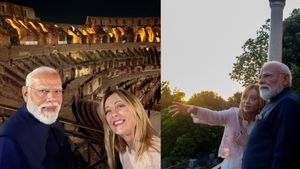 'Melodi' Moment Breaks The Internet: PM Modi Meets Giorgia Meloni In Rome, Colosseum Diplomacy Explained
 -
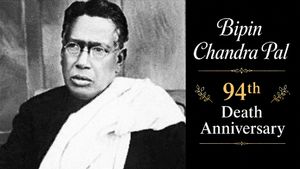 Remembering Bipin Chandra Pal On His 94th Death Anniversary With 10 Bold Quotes On Swaraj And Identity
 -
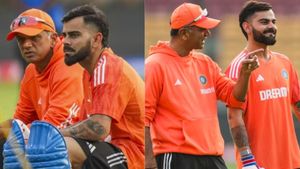 'That Imposter Syndrome Is Always There' — Virat Kohli Just Said What Most High Achievers Won't Admit
 -
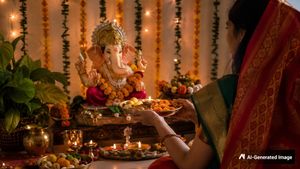 Varada Chaturthi 2026: Significance, Puja Timings, Rituals And Why Devotees Avoid Seeing The Moon
 -
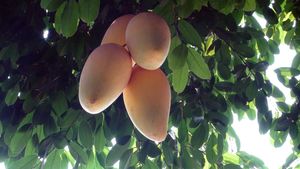 Is Your Mango Safe To Eat? Seven Warning Signs To Check Before You Bite
 -
 Your Quick Energy Drink: The Ultimate Banana Shake Recipe
 -
 Horoscope for Today May 20, 2026 - Calm Energy, Steady Progress for All Signs
 -
 Spicy Home Style Chicken Masala Recipe: Your New Favorite Dinner
 -
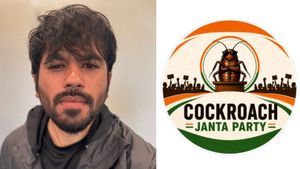 Who Is Abhijeet Dipke? The Man Behind India's Viral Cockroach Janta Party


Thirukkural-On Wealth-On Education-Kural 397

Yaadhaanum naadaamaal uooraamaal ennoruvan
Saandhunaiyung kallaadha vaaru
For the truly learned, every land and town on earth is their own;
When that is so, why does the process of learning not continue till death?
True learning transcends the frontiers of cities and countries, wherever they may be situated in the world, as well as those of their languages and cultures. For the really learned person, the process of learning other languages, literature and culture must be a continuous process.
Formal education can only be the beginning of the process of real learning. A man of learning would never have closed the windows of his mind, to refreshing new winds from fresh avenues of learning, from whatever source it emanates and at whatever stage of one"s life it comes.
The process of learning should go on all one"s life, according to Seneca. Well after he had established his reputation as a sculptor of world renown, Michael Angelo said that “he is still learning". Mahatma Gandhi learnt and imbibed much of the basis for his life"s work, from Tolstoy, Ruskin and Thoreau, and this was much later in life after his formal education in India and England was completed.
The concept of 'citizen of the world", postulated in the first line of this Kural, is in the line with the famous idea of poet Kanian Poongunranar of the Sangam period, who sang,
“Yaadhum uoorae, yaavarum kaelir" (Puram, 192;1)
Which means 'all the world is my home and all men and women are my kin".
It is very necessary that our young people of today should be well informed specifically, on this particular aspect of the matter, so that they may not succumb to narrow-minded parochialism of different types, that are so widely prevalent in our country now.
When loyalties are so broad-based and when there is so much to learn about countries, towns, languages and cultures, why do people restrict themselves so badly?, asks Thiruvalluvar. The question is very specially relevant, when we are facing unpleasant situations of confrontation and unreasonable violence, arising out of religious fundamentalism, linguistic fanaticism, regional and sub-regional loyalties, and even terroristic aberrations, contingent upon one or more of these developments in certain parts of the country.
A parallel is found in Pazhamozhi thus:
“Aatravaum katraar arivudaiyaar akdhudaiyaar
Naatrisaiyum sellaadha naadillai anaadu,
Vaetru naadaahaa thamavaeyaam aayinaal
Aatrunaa vaenduvadhil" (Pazhamozi, 55)

 Continue with Google