




 Click it and Unblock the Notifications


Latest Updates
-
 One Pot Easy Meal: Delicious Veg Pulav Recipe
 -
 'Melodi' Moment Breaks The Internet: PM Modi Meets Giorgia Meloni In Rome, Colosseum Diplomacy Explained
 -
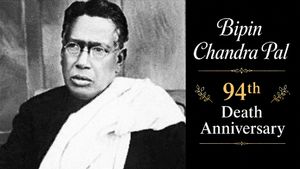 Remembering Bipin Chandra Pal On His 94th Death Anniversary With 10 Bold Quotes On Swaraj And Identity
 -
 'That Imposter Syndrome Is Always There' — Virat Kohli Just Said What Most High Achievers Won't Admit
 -
 Varada Chaturthi 2026: Significance, Puja Timings, Rituals And Why Devotees Avoid Seeing The Moon
 -
 Is Your Mango Safe To Eat? Seven Warning Signs To Check Before You Bite
 -
 Your Quick Energy Drink: The Ultimate Banana Shake Recipe
 -
 Horoscope for Today May 20, 2026 - Calm Energy, Steady Progress for All Signs
 -
 Spicy Home Style Chicken Masala Recipe: Your New Favorite Dinner
 -
 Who Is Abhijeet Dipke? The Man Behind India's Viral Cockroach Janta Party


Tirukkural - 'On Virtue' - In Praise Of God - Kural - 3


- Malarmicai ekinan manati cerntar
Nilamicai itu valvar.
Only those find lasting life that contemplate on Him,
Who has made the blossomed mind His abode
According to upanishads, the mind cultivated along righteous ways, is receptive to Godliness and when such a mind contemplates on God, it blossoms out even more and ensures salvation. In the hearts of all such living creatures God makes his abode-Gita (2;61, 64,71). Though Manakudavar would take the direct meaning of 'Sernthaar' as 'those who have reached', upanishads's meaning of 'those who contemplate', is more appropriate. But the interpretation of the Prince among commentators, of the phrase 'Nilamisai needu vazvaar' to mean 'will attain eternal life', is not really warranted in preference to the more prosaic direct meaning adopted by Manakudavar, which is quite sound.
If anything, the idea, to my mind, could be slightly extended to imply that such a person will live usefully long on earth and when finally he goes, his fame will stay on forever. Such an interpretation could include the attainment of eternal life.
The explanation given above is also broadly acceptable to all religionists. But there are people who would say that the appellation 'Malarmisai aekinaar ' as applied to God would only refer to 'poomaelnadanthaar', which is the specific description of one of the Thirthankaras, according to Jain philosophy. But the universally acceptable interpretation of upanishads in this context is superior to all others and in keeping with broad lines of the pattern of the poet's universal ethical philosophy, running throughout the entire work.
Let us make no mistake about it. Valluvar was a Hindu and a Tamil. The all-pervading basis of his work shows that. But he has made a conscious effort to reconcile and produce an integrated work of ethical code that lays down the lines of a non-denominational practical conduct for an ordinary man, which are a happy blend of the best from Hindu philosophy and rational Tamil culture as well as that was good in the new ideas that blew into Tamil Nadu from other parts of India and from abroad before and during Valluvar's time.
A similar reference found in a latter ethical work of Hindu philosophy in 'Araneri' confirms this view.

 Continue with Google