




 Click it and Unblock the Notifications


Latest Updates
-
 Happy Easter 2026 Wishes: Top 50+ Messages, Status, Captions And Posts To Share With Family And Friends
 -
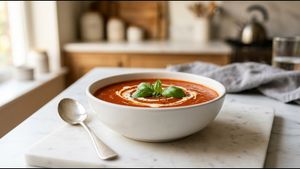 Comfort Style Creamy Blend Tomato Soup Recipe
 -
 Rashmika Mandanna’s “Now It’s Us Three” Post Sparks Speculation Ahead of Anime Awards 2026 Return
 -
 The Softest Ever Homemade Gulab Jamun Recipe
 -
 Where To Eat This Easter 2026: From Chef-Led Experiences To Traditional Feasts Across India
 -
 International Carrot Day 2026: The Hydrating, Skin-Loving Vegetable To Eat More This Summer
 -
 Fluffy Jeera Rice Every Time: The Simple Trick You Need To Know
 -
 Parveen Babi 72nd Birth Anniversary: When A Modern, Unapologetic Style Icon Took Over Bollywood
 -
 5.8 Magnitude Earthquake In Afghanistan Sends Tremors To Delhi: Why Deep Quakes Travel Across Borders
 -
 How to Avoid Getting Sick When Moving Between Heat and AC


Thirukkural- On Virtue- Avoidance Of Meat-Eating-Kural-251


It is inconsistent with the way of living compassion, To fatten oneself on the flesh of a fellow-creature.
Thiruvalluvar's idea is that meat-eating and compassion or tenderness towards all life, ill go together. That is why he asks in anguish, 'how can a meat-eater have compassion?'
In this chapter the virtue of not killing animals and not eating their flesh, has been held up as the crowning aspect of the ever-widening ripple of love (Anbu) expanding into compassion (Arul).
Meat-eating as Parimelalagar would say, is 'at once the cause and consequence of butchery'.
The following lines of Tamil literature – Iniavai Narpathu and jeevaka Chinthamani – are directly relevant in this context.
Uoonaith thinroonai paerukaamai munninidhae
(Iniyavai-5)
Uoonsuvaithudambu veeki naragathil uraidhal
(Jeevaka Chinthamani-1235)


 Continue with Google