




 Click it and Unblock the Notifications


Latest Updates
-
 Superglue, A Potato, A Plastic Bag: The Dangerous DIY Contraception Cases That Shocked Doctors
 -
 One Pot Easy Meal: Delicious Veg Pulav Recipe
 -
 'Melodi' Moment Breaks The Internet: PM Modi Meets Giorgia Meloni In Rome, Colosseum Diplomacy Explained
 -
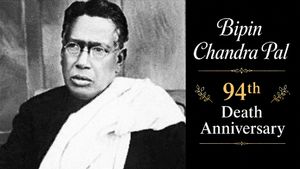 Remembering Bipin Chandra Pal On His 94th Death Anniversary With 10 Bold Quotes On Swaraj And Identity
 -
 'That Imposter Syndrome Is Always There' — Virat Kohli Just Said What Most High Achievers Won't Admit
 -
 Varada Chaturthi 2026: Significance, Puja Timings, Rituals And Why Devotees Avoid Seeing The Moon
 -
 Is Your Mango Safe To Eat? Seven Warning Signs To Check Before You Bite
 -
 Your Quick Energy Drink: The Ultimate Banana Shake Recipe
 -
 Horoscope for Today May 20, 2026 - Calm Energy, Steady Progress for All Signs
 -
 Spicy Home Style Chicken Masala Recipe: Your New Favorite Dinner


Thirukkural-On Virtue-Avoidance Of Killing-Kural 321


Non-killing in itself is the highest virtue; whereas The taking of life will bring in its wake, all evil
The idea here is that the avoidance of the sin of killing is itself an outstanding virtue and the failure to observe the code of non-killing will bring about sins of all description.
This chapter on non-killing has attracted special attention from two angles. One is as an alleged pointer to the religious persuasion of Thiruvalluvar. Some scholars feel that his categoric endorsement of non-killing is because he subscribed to the jain philosophy. This need not really be the case because in the Tamil Society of those days, some of the thinkers had from a purely rational approach, formulated and practiced the doctrine of non-killing and of not eating meat. Valluvar was pre-eminent among them. After all, Bernard Shaw chose to be vegetarian from just such an approach.
The other angle from which this chapter assumes importance is again the rational approach of 'reverence for life' which Albert Schweitzer formulated as the basis of discerning Indian ethics. Schweitzer had studied and assimilated 'Thirukkural' in substantial depth before he came to this conclusion. In fact, he found that the ethics of India taught a responsibility without limit, towards all that lives. It was this that E W Hopkins referred to as india's gentle doctrine of 'Harmlessness'. He would see in this doctrine, the basis for a final solution of all violence and wars in the world.
In any case, Gandhiji believed so and taught his vital principle of Ahimsa or Non-violence. He taught it by precept and example. He built a whole national movement for independence on it, and, to the surprise of all the world, also succeeded finally. Gandhiji's non-violence was, however, a larger concept with the idea on non-violence extending beyond just non-killing.

 Continue with Google