




 Click it and Unblock the Notifications


Latest Updates
-
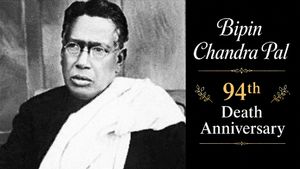 Remembering Bipin Chandra Pal On His 94th Death Anniversary With 10 Bold Quotes On Swaraj And Identity
 -
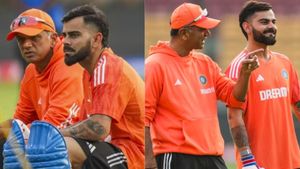 'That Imposter Syndrome Is Always There' — Virat Kohli Just Said What Most High Achievers Won't Admit
 -
 Varada Chaturthi 2026: Significance, Puja Timings, Rituals And Why Devotees Avoid Seeing The Moon
 -
 Is Your Mango Safe To Eat? Seven Warning Signs To Check Before You Bite
 -
 Your Quick Energy Drink: The Ultimate Banana Shake Recipe
 -
 Horoscope for Today May 20, 2026 - Calm Energy, Steady Progress for All Signs
 -
 Spicy Home Style Chicken Masala Recipe: Your New Favorite Dinner
 -
 Who Is Abhijeet Dipke? The Man Behind India's Viral Cockroach Janta Party
 -
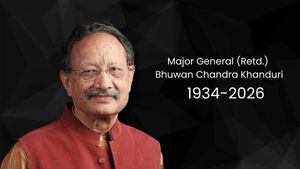 BC Khanduri, Former Uttarakhand CM and Army Veteran, Passes Away at 91
 -
 "Maa, Mujhe Yahan Se Lene Aa Jao": She Begged To Come Home, Nobody Came


On Swami Vivekananda's Birth Anniversary, Let's Talk About His Childhood


Often when we look back into our childhood and early school days, many of us remember the fear of the first days at school and the consequent boredom which has come to characterise schooling in India of late. But the hero of our story lived at a time when Macaulayan English education had just been introduced in India and many of our post-independence politicians had not yet been born to tamper with it further and make it messier as we see it today.
But what really stands out in accounts of Swami Vivekananda's early education is his fearlessness in the pursuit of truth and knowledge. Naren was admitted into the Metropolitan Institution run by the famous Bengali educationalist and scholar Pandit Ishwar Chandra Vidyasagar. Naren refused to learn the English language, asking why one should learn a foreign language before mastering one's own native languages! Naren complained to his parents who tried to convince about the necessity of learning English and yet again he refused! It was only after many months of persuasion and cajoling by his parents and relatives that Naren finally started learning English. And the speed and earnestness with which he then mastered the English language, amazed everyone.
This trait continued to characterise Naren later in his life too as Swami Vivekananda. If he set his mind to acquiring some branch knowledge, then nothing could stop him from mastering it. Later in his life, as a wandering monk, the story is told of how he struggled to learn Panini's sutras on Sanskrit grammar, under a great Sanskrit scholar and the teacher's efforts utterly failed in imparting the knowledge to Naren. But when he himself made a firm resolve to learn Sanskrit grammar, he picked them up in just three days!
Imagine a young school kid today, arguing with his teacher why he should not learn Sanskrit or Tamil before learning English! In such a case, it is most likely that the student would be beaten up either by the English teacher or by the parents themselves! English has become a symbol of the false prestige that the de-Indianised masses in India flaunt to prove their intellectual superiority! Parents swell with pride when tiny tots parrot rhymes in English, even if they don't understand a word of it!
His childhood restlessness continued as he grew up for it was a reflection of the volcano of spiritual energy waiting to burst forth from him. Teachers found it difficult to control his energy and yet respected him for his brilliance of intellect and learning.
Another incident is told of a geography teacher who mercilessly caned Naren at school insisting that his answer was wrong. But Naren held on to his position and the teacher slowly realised his mistake, apologised to Naren and treated him with respect thereafter. Naren's mother consoled and encouraged him after this incident and told him, "If you are right, my boy, what does it matter? It may be unjust and unpleasant, but do what you think right, come what may."
Naren grew up in this healthy atmosphere which encouraged independent thinking and respect for knowledge.
To be continued

 Continue with Google