




 Click it and Unblock the Notifications


Latest Updates
-
 Horoscope for Today May 21, 2026 - Curiosity Rises, Plans Shift
 -
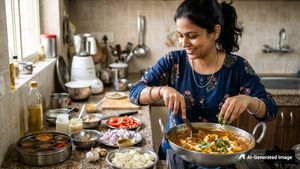 Paneer Lababdar Recipe: Creamy Restaurant-Style Curry Made Easy
 -
 Mouni Roy’s Cannes 2026 Patola Gown Took 300 Hours To Craft — The Story Of Gujarat’s GI-Tagged Weave
 -
 Bread Pizza Recipe: Your Instant Snack Hack
 -
 India's Hottest City Hit 47.6°C Today — This Is What Heatstroke Looks Like
 -
 Exclusive: Rubina Dilaik Said Yes To The Ward In Seconds: Here's The Raw Truth Behind Why
 -
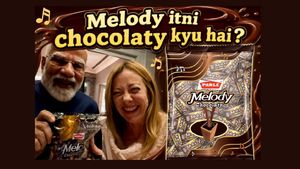 PM Modi Turns Viral ‘Melodi’ Nickname Real With Melody Gift To Meloni, Inside India’s Iconic Toffee Origin
 -
 Superglue, A Potato, A Plastic Bag: The Dangerous DIY Contraception Cases That Shocked Doctors
 -
 One Pot Easy Meal: Delicious Veg Pulav Recipe
 -
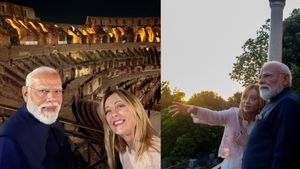 'Melodi' Moment Breaks The Internet: PM Modi Meets Giorgia Meloni In Rome, Colosseum Diplomacy Explained


Fear Of Old Age (The Guidelines of Vedanta III)


Vedanta asks us to practise non-dependence in all matters. The wisdom of Vedanta says that all dependence brings misery and non-dependence alone is happiness. Practice of non-dependence from an early age makes old age less vulnerable to fear and anxiety. Non-dependence has two aspects: physical and mental. Physical non-dependence calls for maintaining good health by following the laws of health: diet, exercise, conservation, relaxation, and moderation. Our body, when neglected, abused, or defiled, becomes a burden and a cause of worry in old age.
Another component of physical non-dependence is material non-dependence, without which a person is forced to live on the charity of others. It is the duty of a family man to make provision for his family and for himself so that in old age he will not be at the mercy of others or even dependent on them for favours.
The other aspect of non-dependence is mental. Mental dependence takes the form of emotional dependence on friends, relatives, people and things. Humans perceive the world through the eye of emotions. Their actions and reactions are guided by emotions. They are bound together by the tie of emotions. Emotion is the vehicle of self-expression, one of the basic urges of human life. When people cannot express their feelings of love, affection, and sympathy, they feel suffocated and live a miserable life. They are heavily dependent on receiving emotional satisfaction from others. Emotional dependence becomes acute when they get old.
As in the case of the practice of non-attachment, practice of emotional non-dependence calls for transferring our dependence to God, knowing that God alone loves us and cares for us. Prophets and saints tell us that it is a mistake to expect any support from the human world. Human love is mostly guided by selfish motives, and dependence on such love brings nothing but disappointment. The more we are able to depend on God, the less will be our dependence on others. Dependence on God, however, does not come by itself. This requires deepening our God-consciousness by practising prayer, meditation, and dispassion. Those who are not inclined to follow these practices are advised to develop the habit of reading books, writing, painting, or playing musical instruments, etc., so that they can keep themselves occupied, have emotional satisfaction, and be non-dependent.
Read about Swami Sarananda's advice for a fear free old age on the Next Page
About the author
Swami Adiswarananda
Swami Adiswarananda, the Minister-in-charge of the Ramakrishna-Vivekananda Centre, New York, USA, is a senior monk of the Ramakrishna Order. He is a well-known thinker and contributes articles to various journals.
Chat With The Devotees Of Ramakrishna Paramahamsa

 Continue with Google