




 Click it and Unblock the Notifications


Latest Updates
-
 Horoscope for Today April 06, 2026 - Practical Steps Bring Calm Progress
 -
 Chana Masala Recipe: Experience Dhaba Style Authentic Taste
 -
 Struggling With Oily Skin This Summer? Simple Tips to Keep Shine Under Control
 -
 Garlic Bread Recipe: The Cheesy Bakery Style Trick You Need
 -
 Soha Ali Khan Swears By This ‘Gentle Game-Changer’ Lemon Drink for Gut Health: Full Recipe Inside
 -
 World Health Day 2026: You’re Not As Healthy As You Think—Here’s Why
 -
 One Pot Easy Lunch Recipe: Flavorful Veg Pulao
 -
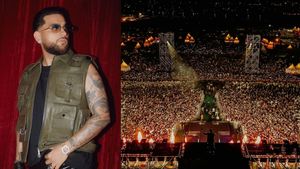 Karan Aujla India Tour Controversy: Lucknow and Ludhiana Shows Cancelled—What Went Wrong?
 -
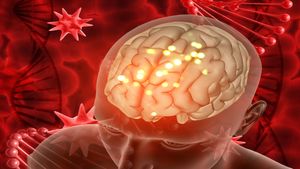 Kissing Disease Linked to 3x Higher Risk of Multiple Sclerosis: What You Should Know
 -
 Feeling Drained in the Heat? 10 Healthy Drinks to Sip This Summer


Fear of Death-(Response Of Vedanta)


To enjoy life by being oblivious of the reality of death is infantile and absurd. Our attempt to see only the bright side of life is futile. Those who accept death as inevitable but still try to get compensation hereafter do not really face the question of death. Everlasting life in terms of time is irrational. That which begins in time will also end in time. Even the longest life will come to an end. The idea of physical immortality is a fanciful dream.
The True Identity of A Person
Fear of death, according to Vedanta, is rooted in our mistaken self-identity. Is a human being just a physical entity made of muscles, blood, and bone, or a mental being made of thoughts and memories? Is there anything beyond that? For physical scientists, man is nothing more than a material entity made of carbon, hydrogen, nitrogen, oxygen, sulphur, and other elements. Sociologists define man as a member of a family, group, nation, or race. Psychologists define man in terms of his thoughts and feelings. All such scientific descriptions, however, leave out an essential part of man, namely his soul, the only conscious entity, without which a human body is absolutely valueless.
The body of man is sometimes described as the city of the soul, a city of nine or eleven gates. The nine gates consist of the eyes, the ears, the nostrils, the mouth, and the organs of evacuation and generation. Two additional gates are the navel and the aperture at the top of the head. According to the seers of the Vedas, a human being has three bodies, one inside the other. First is the gross physical body. It is material by nature and is produced by a combination of the gross elements. It consists of bone, flesh, blood, and other substances. Depending upon food for its existence, it endures as long as it can assimilate nourishment. Non-existent before birth and after death, it lasts only for a short interval between birth and death.
Read of the other two bodies and more on the Next page
About the author
Swami Adiswarananda
Swami Adiswarananda, the Minister-in-charge of the Ramakrishna-Vivekananda Centre, New York, USA, is a senior monk of the Ramakrishna Order. He is a well-known thinker and contributes articles to various journals.
Chat With The Devotees Of Ramakrishna Paramahamsa


 Continue with Google