




 Click it and Unblock the Notifications


Latest Updates
-
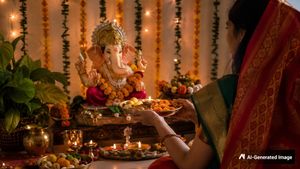 Varada Chaturthi 2026: Significance, Puja Timings, Rituals And Why Devotees Avoid Seeing The Moon
 -
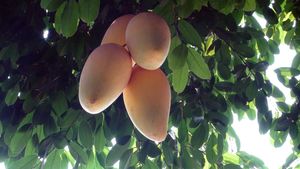 Is Your Mango Safe To Eat? Seven Warning Signs To Check Before You Bite
 -
 Your Quick Energy Drink: The Ultimate Banana Shake Recipe
 -
 Horoscope for Today May 20, 2026 - Calm Energy, Steady Progress for All Signs
 -
 Spicy Home Style Chicken Masala Recipe: Your New Favorite Dinner
 -
 Who Is Abhijeet Dipke? The Man Behind India's Viral Cockroach Janta Party
 -
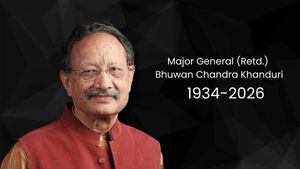 BC Khanduri, Former Uttarakhand CM and Army Veteran, Passes Away at 91
 -
 "Maa, Mujhe Yahan Se Lene Aa Jao": She Begged To Come Home, Nobody Came
 -
 Nachos Recipe: Your Go-To Crunchy Party Snack
 -
 Hacks 101: How To Save Your Makeup When It Starts to Melt


Ramana Maharshi's Biography-Mother's Entreaties


It was in one such temple shrine that his mother met him. Her eldest son too had accompanied her to Tiruvannamalai. Her repeated entreaties and lamentations, threats and reproaches during her stay there for several days failed to elicit any response from him. At last when an onlooker requested the Swami to express at least in writing what he had to say, the Swami wrote: “The Lord controls the fate of souls in accordance with their Prarabdha Karma. Whatever is destined not to happen will not happen, try as you may. Whatever is destined to happen will happen, whatever you may do to prevent it. The best course, therefore, is to remain silent"
The Maharshi would teach later: 'All the actions that the body is to perform are already decided at the time it comes into existence; the only freedom you have is whether or not to identify yourself with the body.'
The mother returned home. The two and quarter years that the Swami spent in the different hill shrines of Arunachala were one of continual Samaddhi. It was one of his devotees by name Kavyakantha Ganapati Muni who declared that the Swami be henceforth called Bhagavan Ramana Maharshi. While the name Maharshi was current among devotees, in later days he was addressed usually as 'Bhagavan'. This period of apparent tapas or sddhana in his life was not in quest of Self-realization, rather it was the result of Self-realization. He himself said that there was no sadhana for him after the awakening at his uncle's house at Madurai.
The first signs of an outwardly normal life were now appearing in the Maharshi. He began to take food at regular intervals, by begging. He began to respond to devotees, and to expound to them the meanings of scriptures. His luminous personality drew a group of devotees around him and effortlessly an Ashrama sprang up. It was not only spiritual aspirants who came to him but simple people, children and even animals.
The Maharshi's real teaching was always through silence. Sitting in his holy presence would remove the restlessness of a bereaved widow, silence the vacillations of an intellectual, and the animals enjoyed his compassionate concern and love. The ideal of samadarsitva was fully manifest in the life of the Maharshi. When referring to animals he would not use the pronoun adu (in Tamil) meaning 'it', but avan or aval meaning 'he' or 'she'. He would treat them with due respect. He would say, 'Who knows which souls are inhabiting these bodies!' Squirrels and monkeys would eat out of his hands. Cows and dogs too enjoyed his divine love and solicitude.
To be continued
About the author
Swami Yuktatmananda
Swami Yuktatmananda of Ramakrishna Mission Vidyalaya, Coimbatore, is a monk of the Ramakrishna Order. This article is an excerpt from His 'The Holy Beacon of Arunachala,' which is a narration of Ramana Maharshi's biography. In this article he describes about Ramana Maharshi's mother making repeated entreaties to Him to return home.

 Continue with Google