




 Click it and Unblock the Notifications


Latest Updates
-
 Your Refreshing Mint Drink: The Ultimate Virgin Mojito Recipe
 -
 Horoscope for Today April 20, 2026 - Small Choices, Steady Progress
 -
 Aromatic South Indian Style Ghee Rice Recipe
 -
 Fashion Hacks 101: How To Style A Shirt Into 5 Fresh And Cool Summer Looks
 -
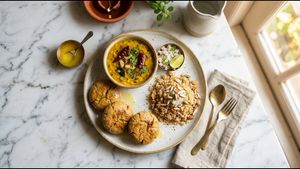 Traditional Festival Special Dal Bati Churma Recipe: A Taste of Rajasthan
 -
 Idli, Vada And Sambar-Rice Leave 97 Employees Sick In Bengaluru: When Summer Heat Raises Fermented Food Risks
 -
 Deepika Padukone, Ranveer Singh Announce Second Pregnancy, With Daughter Dua At The Centre Of The Reveal!
 -
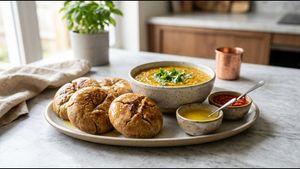 Rajasthani Authentic Method Dal Bati Recipe: A Taste of Tradition
 -
 World Liver Day 2026: Fatty Liver Symptoms Expecting Mothers Often Mistake For Normal Discomfort
 -
 Akshaya Tritiya 2026: Smart Financial Moves For Every Zodiac Sign By Senior Vedic Astrologer Krishnan Sampath


Matangi Jayanti 2026 Significance, Muhurat And Rituals: What Makes This Mahavidya Day Spiritually Unique

Matangi Jayanti holds a very specific place in the Shakta tradition-especially for those who connect with the idea of speech, expression, and clarity of thought.

In 2026, Matangi Jayanti is observed today on Monday, 20 April 2026, during Vaishakh Shukla Tritiya, a lunar phase that is considered spiritually active for worship related to wisdom and inner alignment.
Date And Timing Of Matangi Jayanti 2026
Matangi Jayanti follows the Hindu lunar calendar rather than a fixed Gregorian date, which is why the timing shifts slightly every year.
For 2026:
- Tithi Begins: 19 April 2026 at 10:49 AM
- Tithi Ends: 20 April 2026 at 07:27 AM
This means the Tritiya tithi overlaps into the morning of 20 April, which is why the main observance is fixed on that day.
Matangi Jayanti 2026 Puja Muhurat
There isn't a single universally fixed muhurat for Matangi Jayanti like some mainstream festivals. Instead, worship is traditionally done when the tithi is active and the day has begun.
- Best Time for Puja: After sunrise on 20th April 2026
- Ideal Window: Morning hours till midday
This period is considered spiritually receptive in most Panchang-based traditions for Mahavidya worship.
Who Is Goddess Matangi
Goddess Matangi is one of the Ten Mahavidyas, a group of powerful forms of the Divine Mother in Shaktism.
She is closely associated with:
- Speech and communication
- Learning and knowledge
- Music, poetry, and creative expression
In Shakta and Tantric traditions, Matangi is regarded as a deity linked with expression and articulated wisdom. Her symbolism often includes a green complexion and a parrot in artistic iconography, representing growth, learning, and the flow of speech. These visual forms are part of devotional and artistic traditions and may vary across regions.
In many interpretations, she is also described as the Tantric form of Saraswati. This does not mean she replaces Saraswati, but that she represents a different dimension of wisdom-one that is less structured, more instinctive, and closely tied to lived expression, sound, and speech.
The Story Behind Matangi Jayanti
The most widely accepted traditional story connected to Matangi comes from Tantric and Mahavidya lore.
Once, Lord Shiva and Goddess Parvati were seated in Kailash when divine guests arrived, and food was being served. During the meal, remnants of food-considered "leftover" in a ritual sense fell to the ground.
From this moment, a radiant feminine form emerged from that energy. She came to be known as Goddess Matangi, also called Ucchishta Matangini.
The idea here is not literal "leftover food," but symbolic transformation showing that divine energy is not restricted by rigid boundaries of purity or social classification. Matangi represents knowledge that exists beyond control, rules, or convention.
Why Matangi Jayanti Is Relevant
Matangi is not worshipped for material gains in the usual sense. Her significance is more internal and expressive.
She is associated with:
- Clear and confident speech
- Better articulation of thoughts
- Creative flow in music, writing, and arts
- Reduction of mental confusion
In simple terms, she is linked to how you express what is already within you.
For students, artists, writers, or anyone working with communication, this day is often seen as a symbolic reset for clarity and expression.
Rituals Followed on Matangi Jayanti
`
The rituals are simple and can be done at home without elaborate setups.
Basic puja steps:
- Clean the space and set up an image or idol of Goddess Matangi
- Light a diya and incense
- Offer flowers, fruits, sweets, and sandalwood
Vrat practices:
- Some devotees observe a simple fast
- Food restrictions often include avoiding onion, garlic, and non-vegetarian food
- Charity is encouraged, especially items linked to learning like books or stationery
What Matangi Jayanti Actually Represents
Matangi Jayanti is less about external ritual intensity and more about internal correction-especially around how thoughts become words.
It is often observed as a day to:
- Slow down scattered thinking
- Speak more consciously
- Reconnect with creative or learning goals
- Notice how communication shapes relationships and decisions
There's also a strong idea in the tradition that expression is not just social, it's spiritual.
With Matangi Jayanti 2026 falling today on 20th April, the early hours of the day carry the most traditional significance due to the active Tritiya tithi. Whether someone follows the vrat or simply reflects on communication and creativity, the essence of the day remains the same: paying attention to how thoughts turn into words, and how words shape everything that follows.


 Continue with Google