




 Click it and Unblock the Notifications


Latest Updates
-
 Varada Chaturthi 2026: Significance, Puja Timings, Rituals And Why Devotees Avoid Seeing The Moon
 -
 Is Your Mango Safe To Eat? Seven Warning Signs To Check Before You Bite
 -
 Your Quick Energy Drink: The Ultimate Banana Shake Recipe
 -
 Horoscope for Today May 20, 2026 - Calm Energy, Steady Progress for All Signs
 -
 Spicy Home Style Chicken Masala Recipe: Your New Favorite Dinner
 -
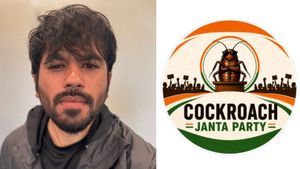 Who Is Abhijeet Dipke? The Man Behind India's Viral Cockroach Janta Party
 -
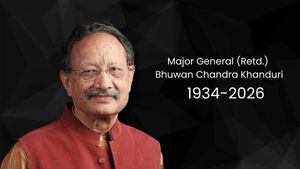 BC Khanduri, Former Uttarakhand CM and Army Veteran, Passes Away at 91
 -
 "Maa, Mujhe Yahan Se Lene Aa Jao": She Begged To Come Home, Nobody Came
 -
 Nachos Recipe: Your Go-To Crunchy Party Snack
 -
 Hacks 101: How To Save Your Makeup When It Starts to Melt


Holi 2026: 12 Incredible Ways Different States Celebrate the Festival of Colours

For many of us, Holi means colours in the air, gujiyas at home, and that one friend who starts planning water balloons days in advance. But step outside your city, and you'll realise something beautiful, Holi doesn't look the same everywhere. In some places, flowers replace colour. In others, widows lead the celebration. Somewhere else, warriors display martial arts instead of throwing gulal.
Across India, Holi carries the same spirit of renewal and togetherness, but it is expressed in dramatically different, deeply rooted regional traditions. Here's how various states bring their own flavour to the festival of colours.

How Different States Celebrate Holi
Uttar Pradesh: Seven Shades of Holi in Braj
If there's one place where Holi feels like a full cultural festival rather than a single-day event, it's Uttar Pradesh, especially the Braj region associated with Lord Krishna.
In towns like Mathura, Vrindavan, Barsana, and Nandgaon, Holi unfolds in multiple forms over several days.
In the Braj region alone, the festival is celebrated in seven distinct ways:

- Ladoo Mar Holi - where devotees throw sweets instead of colours.
- Lathmar Holi - women playfully chase men with sticks, recreating Krishna-Radha folklore.
- Chhadi Mar Holi - marked by symbolic stick play.
- Phoolon Ki Holi (Phoolon Wali Holi) - celebrated with flower petals instead of gulal.
- Widow's Holi - where widows, once excluded from festivities, now celebrate openly in Vrindavan.
- Rangbhari Holi - observed in Varanasi, marking Lord Shiva's return with Goddess Parvati.
- Huranga Holi - celebrated with playful colour-throwing and teasing traditions.
Varanasi is also known for Masan Holi, celebrated near the cremation ghats, where ash replaces colour; blending devotion, detachment, and celebration in a uniquely spiritual way.
West Bengal and Odisha: Dol Jatra and Basant Celebrations
In West Bengal and Odisha, the festival is commonly known as Dol Jatra or Dol Purnima. Idols of Radha and Krishna are placed on swings and taken out in colourful processions.
In Shantiniketan, the festival is celebrated as Basant Utsav, which was started by Rabindranath Tagore. In this region, students in yellow attire greet the arrival of spring with song, dance, and poetry, and gulal is used in a relatively more cultured and artistic way.
Punjab: Hola Mohalla

In Punjab, this festival is celebrated with the event of Hola Mohalla, founded by Guru Gobind Singh. Instead of water fights and colour, this event highlights martial arts, mock battles, horse riding, poetry, and eating. This is a potent mix of spirituality and warrior culture.
Rajasthan: Royal Holi
In Rajasthan, Holi celebrations have a regal touch. In cities like Udaipur and Jaipur, Royal Holi celebrations are common. These celebrations are organised by royal families.
Holi celebrations include processions, folk dances, decorated horses and elephants, and Holika Dahan.
Uttarakhand: Baithki and Khadi Holi
In Uttarakhand, especially in Kumaon, music plays a vital part in the celebration of Holi.
- Baithki Holi - where people gather indoors and sing classical ragas and devotional songs.
- Khadi Holi - This is celebrated in open areas with traditional costumes and music.
Instead of loud DJ beats, you'll hear harmoniums and dholaks echoing through the hills, giving the festival a soulful rhythm.
Bihar: Phaguwa
In Bihar, Holi is commonly referred to as Phaguwa. The area is filled with folk songs, and people assemble to enjoy the festivities with colours, music, and food items. The focus is entirely on rural customs and festive mood.
Maharashtra and Gujarat: Rang Panchami
In Maharashtra and Gujarat, the celebrations of Holi sometimes stretch to Rang Panchami, which takes place a few days after Holi, with a focus on colour play and community celebrations.
Manipur: Yaosang

In Manipur, it is observed as Yaosang, a five-day celebration that brings together both Hindu and tribal customs. It features prayer songs, sports events, traditional Thabal Chongba dance, and cultural events, making it one of the most unique celebrations of Holi in India.
Goa and the South: Shigmo and Kamadahana
In Goa, Holi coincides with Shigmo, a colourful festival held during the season of spring with street parades, folk dances, and floats.
In parts of Karnataka, the festival is also referred to as the festival of Kamadahana, which is a symbol of the legend of Kamadeva.
One Festival, Many Identities
What makes the festival of Holi special is not just the use of colours, but the way different regions of the country have adapted this festival to reflect their individual histories, faiths, and cultures. From flower petals in Vrindavan to royal processions in Rajasthan and Yaosang dances in Manipur, Holi proves that celebration in India is never one-dimensional.
No matter where you are, the spirit remains the same: renewal, forgiveness, and the simple joy of coming together.

 Continue with Google