




 Click it and Unblock the Notifications


Latest Updates
-
 Your Quick Energy Drink: The Ultimate Banana Shake Recipe
 -
 Horoscope for Today May 20, 2026 - Calm Energy, Steady Progress for All Signs
 -
 Spicy Home Style Chicken Masala Recipe: Your New Favorite Dinner
 -
 Who Is Abhijeet Dipke? The Man Behind India's Viral Cockroach Janta Party
 -
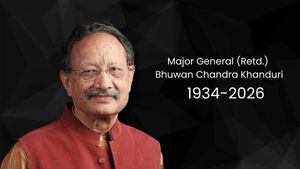 BC Khanduri, Former Uttarakhand CM and Army Veteran, Passes Away at 91
 -
 "Maa, Mujhe Yahan Se Lene Aa Jao": She Begged To Come Home, Nobody Came
 -
 Nachos Recipe: Your Go-To Crunchy Party Snack
 -
 Hacks 101: How To Save Your Makeup When It Starts to Melt
 -
 Always Online, Always Exhausted: Expert Explains The Mental Wellness Cost Of Digital Work Culture
 -
 South Style Meal Vegetable Kurma Recipe: A Flavorful Delight


What’s Behind the Masks And Rituals Of The Ramman Festival In Saloor-Dungra?

In Saloor-Dungra, a village in Uttarakhand, the Ramman festival is part of everyday life. It's not treated as a special event that comes and goes; it's something people grow up with, take part in, and pass on. As spring approaches, preparations begin in a quiet, familiar way. Songs are rehearsed, roles are assigned, and families get ready for their responsibilities. For the people here, Ramman is how traditions are kept alive and how the village comes together, year after year.

Roles Rooted In Responsibility
Ramman festival is built from the ground up by the community. Every caste, every household, has a part to play. The structure of the festival mirrors the structure of village life. Youth and elders perform side by side, passing down gestures and rhythm as naturally as they pass down tools or stories.
The Brahmans handle prayers and ceremonies with practiced ease, while the Bhandaris, known for their martial lineage, are entrusted with wearing the sacred Narasimha mask, a powerful symbol of protection and divine strength. This is a tradition in motion, shaped by time and trust.
Honoring The Village Deity, One Day At A Time
Each year, one family takes on the responsibility of hosting Bhumiyal Devta, the village's guardian deity. It's a role that requires daily rituals and careful observance, not just during the festival, but throughout the year. This responsibility deepens the family's connection to their faith and draws the wider community into a shared sense of devotion and continuity.
The Story Is The Stage
Ramman festival doesn't use a script. It doesn't need one. Through dance, music, and masks, villagers bring to life episodes from the Ramayana with quiet precision and expressive power. The performances take place in the temple courtyard, where stories unfold to the beat of Dhol-Damaun. There are no dialogues, only movement, rhythm, and expression.
Characters like Ram, Sita, and Hanuman appear through intricate choreography and handmade costumes, while local songs passed down orally guide each performance like a heartbeat.
Rooted In the Past, Remembered In Practice
The roots of Ramman festival trace back centuries. Locals believe that Adi Shankaracharya, the 8th-century philosopher and reformer, inspired its early form. His disciples, traveling through the region, used masked performances to share stories and revive interest in Hindu philosophy. That seed grew into the Ramman festival seen today, a festival that stays grounded in ritual but open to evolution.

Recognized Beyond Borders
In 2009, UNESCO added Ramman festival to its list of Intangible Cultural Heritage, recognizing not just its beauty but its role in preserving cultural knowledge through lived experience. The dances like Mor-Morni, Khyali, Maal, and Banya-Baniyan are more than performances. They're inherited skills, kept alive through community effort and dedication.
Carried Beyond A Single Village
While Saloor-Dungra is the festival's heart, nearby villages like Dungri, Baroshi, and Selang celebrate their own versions of Ramman festival over 11 to 13 days. The rituals vary slightly, but the spirit remains the same-communal, sacred, and grounded in everyday life. These celebrations include plays, offerings, music, and moments of collective reflection.
Passing The Flame
Ramman festival survives because it is shared. Children learn the rhythms early first by watching, then by joining. Elders teach without ceremony, through repetition and example. There are no formal classes, but there is constant learning. That is how heritage is carried forward not in textbooks, but in the body, the voice, the drumbeat.
Where Culture Lives Without Saying So
Ramman doesn't rely on preservation, it endures through participation. It continues because it still matters to those who dance, those who organize, and those who simply watch and feel a part of something bigger than themselves.

Festivals like Ramman offer a break from the fast pace of modern life, providing an opportunity to connect with traditions that remain steady and meaningful, even without the need for constant attention.

 Continue with Google