




 Click it and Unblock the Notifications


Latest Updates
-
 Rich Home Style Masala Chicken Gravy Recipe
 -
 Viral IIT Baba Abhay Singh Secretly Marries Engineer Pratika, Netizens Question His Spiritual Path
 -
 Karishma Tanna and Husband Varun Bangera Share Pregnancy News With Fun Photoshoot, Call Baby ‘Little Miracle’
 -
 Why Women Leaders Are Crucial for Driving Change in India’s Healthcare Sector
 -
 Who Is Bhoomika Yadav? Meet Raipur’s 19-Year-Old, Youngest Indian Model To Walk For Chanel
 -
 Super Crispy Street Style Aloo Tikki Recipe: Your New Favorite Snack!
 -
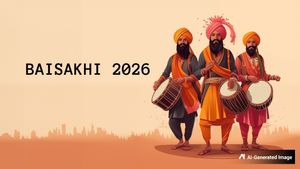 Baisakhi 2026: Date, History, Rituals and Cultural Significance Explained
 -
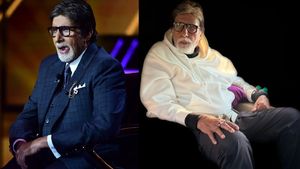 At 83, Amitabh Bachchan Finds Not Working Each Day Disturbing: Why Breaking Routine Triggers Anxiety
 -
 Alia Bhatt Serves Sharp, Subtle Drama in Gaurav Gupta’s Black Three-Piece Tuxedo
 -
 Boss Lady By Zlaata: Workwear That Made Confidence Visible


Significance Of Shiva Tandava

Dance is a divine art form. India has always been a land with diverse art forms and each of them unique in itself. One of the dance form happens to be the Tandava. Tandava is regarded as a celestial dance which is supposed to be performed by Lord Shiva.
Shiva's tandava is regarded as the source of cycle of creation, preservation and dissolution. The name Tandava comes from 'Tandu' who was an attendant of Lord Shiva, who instructed Bharata the use of Angaharas and Karanas, modes of the dance. Karana is the combination of hand gestures with feet to form a dance posture. Angahara is composed of seven or more Karanas.
Shiva's Tandava is said to be of two forms. The first is Ananda Tandava which denotes a happy dance and the second is Rudra Tandava which is the dance of destruction. Lord Shiva is referred to as the 'Nataraja' or the lord of dance.
Dancing, in Indian culture has been seen as a way to unite with the Creator. Shiva's dance is a symbol of being one with God through the divine act of dancing. This cosmic dance of Shiva is called 'Ananda Tandava,' meaning the Dance of Bliss, and symbolizes the cosmic cycles of creation and destruction.
Let us take a look at the forms and significance of Shiva Tandava.

Types Of Tandava
Scholars have found seven different types of Tandava. The tandava performed with joy is called Ananda Tandava and that which is performed in violent mood is called Rudra Tandava. The other types of tandava identified are Tripura Tandava, Sandhya Tandava, Samara Tandava, Kali Tandava, Uma Tandava and Gauri Tandava.

Legends Of Tandava
There are many legends associated with the Tandava. The first one is about a dwarf-demon called Apasmara. Apasmara was a dwarf who represented ignorance and epilepsy. In order to preserve knowledge in the world, Apasmara could not be killed. To do so would throw out the balance of knowledge and ignorance, as to kill Apasmara would mean attaining knowledge without effort, dedication and hard work. Hence, Apasmara grew extremely arrogant of his powers and went on to challenge Lord Shiva. It was then that Lord Shiva took the form of Nataraja and performed the famous Tandava or the dance of destruction, eventually crushing Apasmara under His feet.

Legends Of Tandava
The second legend of Tandava is associated with Goddess Sati. The Goddess emolated Herself in the yagna fire at Daksha's ceremony, following the insult upon Her husband, Lord Shiva by Her father. When Lord Shiva became aware of the incident, He became extremely furious. He sent out his fierce form, Veerabhadra to destroy the yagna. Veerabhadra destroyed Daksha's yagna and severed his head. After this, Lord Shiva was overcome with grief over the death of Sati. He took Her corpse on His shoulders and performed the Rudra Tandava. The universe came on the verge of destruction when Lord Vishnu intervened and with the help of His Sudarshan Chakra cut Sati's corpse into pieces to bring Lord Shiva to His senses.
Pic Courtesy:Yashima

Legends Of Tandava
The third legend is related to the Tandava being introduced to the mankind. The Gods & Goddesses pleaded Lord Brahma to create another veda which would be simple for the common man to understand. It is believed that considering this request Lord Brahma created the Panchamaveda, (fifth veda) which came to be known as Natyaveda, an essence of the other four vedas. It is believed that it has combined pathya (words) form the Rigveda, abhinaya (gesture) from the Yajurveda, geet (music and chant) from Samaveda and rasa (sentiment and emotional element) from Atharvaveda to form the fifth veda, Natyaveda.
Pic Courtesy:Soham Bannerjee

Legends Of Tandava
The third legend is related to the Tandava being introduced to the mankind. The Gods & Goddesses pleaded Lord Brahma to create another veda which would be simple for the common man to understand. It is believed that considering this request Lord Brahma created the Panchamaveda, (fifth veda) which came to be known as Natyaveda, an essence of the other four vedas. It is believed that it has combined pathya (words) form the Rigveda, abhinaya (gesture) from the Yajurveda, geet (music and chant) from Samaveda and rasa (sentiment and emotional element) from Atharvaveda to form the fifth veda, Natyaveda.

Legends Of Tandava
After creating this natyaveda, Lord Brahma gave it to sage Bharata and asked him to popularise this veda on earth. Following the words of Lord Brahma, sage Bharata wrote Natyashastra or the Science of Dramaturgy, a comprehensive work on the science and technique of Indian drama, dance and music. Bharatanatyam might have got its name from sage Bharata. It is the most revered work on dance till date.

Significance Of Shiva Tandava
The dance is a depiction of five principal manifestations of the eternal energy:
- Srishti- Creation
- Sthithi- Preservation
- Samhara- Destruction
- Tirobhava- Illusion
- Anugraha- Release
Tandava thus, symbolises the cosmic principles creation, preservation and destruction. It also symbolises the daily rhythm of birth and death.


 Continue with Google