




 Click it and Unblock the Notifications


Latest Updates
-
 Horoscope for Today April 05, 2026 - Small Choices Guide Calm Momentum
 -
 Happy Easter 2026 Wishes: Top 50+ Messages, Status, Captions And Posts To Share With Family And Friends
 -
 Comfort Style Creamy Blend Tomato Soup Recipe
 -
 Rashmika Mandanna’s “Now It’s Us Three” Post Sparks Speculation Ahead of Anime Awards 2026 Return
 -
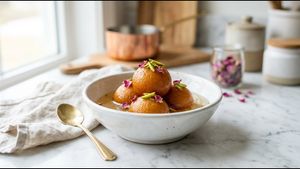 The Softest Ever Homemade Gulab Jamun Recipe
 -
 Where To Eat This Easter 2026: From Chef-Led Experiences To Traditional Feasts Across India
 -
 International Carrot Day 2026: The Hydrating, Skin-Loving Vegetable To Eat More This Summer
 -
 Fluffy Jeera Rice Every Time: The Simple Trick You Need To Know
 -
 Parveen Babi 72nd Birth Anniversary: When A Modern, Unapologetic Style Icon Took Over Bollywood
 -
 5.8 Magnitude Earthquake In Afghanistan Sends Tremors To Delhi: Why Deep Quakes Travel Across Borders


Flowers For Worship Of Different Deities


Different flowers are associated for the worship of different deities in Hinduism.
Below mentioned are the flowers for worship of different deities according to the Hindu faith.
Lord Ganesha: Arugampul or Bermuda grass commonly found everywhere is the most auspicious offering to Lord Ganesha. Vel Erukampoo (White colour) or Calotropis Gigantea (Botanical name) is also considered as auspicious for the worship of Lord Ganesha.
Lord Shiva: It is well known to a devout Hindus that Bilva leaves are considered the most auspicious to be offered to Lord Shiva. Apart from it, Thumbai Poo (Leucas aspera), Purple orchids or Kovidaar which is also called Mandarai flowers are also recommended for the worship of Lord Shiva. Champak and Vel Erukkampoo are also offered to invoke His blessings.
Lord Vishnu: It is a commonly known fact that Tulsi (Basil leaves) leaves are considered the most auspicious to be offered to Lord Vishnu. This practice simply reminds one of Lord Krishna's statement in the Bhagavad Gita that even a small little leaf offered with total devotion is suffice to appease Him.
Apart from Tulsi, Paraijata, Thechi, (Ixora coccinea), Shankhupushpam or Aparajitha (Butterfly pea - Clitoria ternatea) are also considered auspicious to be offered to Lord Vishnu. Lotus which is often compared to the eye of the Lord in scriptures and devotional works acclaiming His beauty, is no doubt an auspicious flower offering to Him.
Goddess Parvati or Devi: There are mentions of various flowers in 'Lalita Sahasranama' dedicated to Devi. She is also said to be residing in the Kadhamba groves, for which, She is acknowledged with devotion as 'Kadhambavana Vasini'. Kadamb' (Neolamarckia cadamba), Champak (Michelia champaca), Hibiscus, Punnaag or Sultan Champa, Jasmine, etc are ideal to attract the grace of Devi.
Goddess Durga: Red flowers are basically offered to Goddess Durga. Hibiscus, Thechi (Ixora coccinea), Sev Arali (Nerium indicum or Nerium oleander) are some of the most commonly used flowers for the worship of Durga.
Goddess Lakshmi: Lotus happens to be the abode of Goddess Lakshmi. Lotus is considered as sacred to be offered to Goddess Lakshmi. Thazhampoo, which is also called Ketaki or Screwpine, Thechi, Champak (Michelia champaca) and Jamanthi (Chrysanthemum - Corn Marigold) are also some flowers that invokes the Grace of the goddess of wealth.
Goddess Saraswati: As Goddess Saraswati is seated on a white lotus, the flower is offered to Her. Parijata is not to be offered to Goddess Saraswati.
Lord Subhramanya: Lotus and Sev Arali (Nerium indicum or Nerium oleander) are considered as important among the flower categories to be offered to Lord Subhramanya.
Dakshinamurthy: Considered as the 'Guru' for the Saivites, Mullai a category of the Jasmine family ushers in the blessings of Dakshinamurthy.
Hanuman: Tulsi or Basil leaves and a garland made of 'Beetle leaves' are recommended to invoke the blessings of Lord Hanuman.
These flowers for worship of different deities aids in establishing a communion with one's chosen deity and invariably invokes grace.


 Continue with Google