




 Click it and Unblock the Notifications


Latest Updates
-
 At 83, Amitabh Bachchan Finds Not Working Each Day Disturbing: Why Breaking Routine Triggers Anxiety
 -
 Alia Bhatt Serves Sharp, Subtle Drama in Gaurav Gupta’s Black Three-Piece Tuxedo
 -
 Boss Lady By Zlaata: Workwear That Made Confidence Visible
 -
 These 6 Seemingly Harmless Lifestyle Habits May Be Increasing Your Colorectal Cancer Risk
 -
 World Health Day 2026: Grand Master Akshar Explains How Yoga Can Help Manage Diabetes and Hypertension
 -
 Dal Khichdi Recipe: A Light Comfort Meal Everyone Loves
 -
 From Hashtags to Merch Drops: How Fandom Fashion Became Part of the Story
 -
 ₹1000 Crore and Counting: ‘Dhurandhar 2’ Isn’t Just a Hit, It’s a Box Office Phenomenon
 -
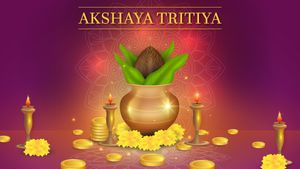 Akshaya Tritiya 2026 Date: April 19 or 20? Know The Right Day To Buy Gold This Year
 -
 From Water Fights to Egg Games: Unique Easter Monday Traditions Explained


The significance of the Hindu ritual of Aarati


Aarati, the ritual that a Hindu is accustomed to from an early stage of childhood, when probed into to asses the significance behind, reveals a beautiful connotation. Aarati is one of the sixteen steps (shodasha upachaara). It is the lighted lamp or camphor waved in a clockwise circular movement to light each and every part of the image of the Lord and finally the entire form. The process is normally accompanied by ringing of bell, chanting of mantras, sounding of musical instruments, clapping etc. At the completion of the process, the devotee or the participant in the pooja places the hands over the flame and gently touch the eyes with the hands and the top of the head.
Performing Aarati with camphor holds a spiritual significance. The camphor that is lit signifies the vasanas or the inherent tendencies that causes birth and death. The flame of the camphor which aids in beholding the beautiful form of the Lord is the symbolic representation of Knowledge. This backs the fact that though everything in creation represents God, the true vision of the Lord can only be begotten with knowledge.
The image of the Lord that we adore signifies 'Consciousness' or the 'one eternal being'. The priest who waves the aarati represents the spiritual guru who through knowledge shows one the true form of the Lord. Thus the flame of knowledge burns the vasanas or the inherent tendencies with the true vision of the Lord. Further more the camphor while giving in to the fire of knowledge emits a fragrance which is the unconditional love which is characteristic of a realised person. Thus when Aarati is performed we normally close our eyes to envision the Lord within which signifies that each of us is the temple of God.
The ringing of the bell , chanting of mantras, singing and clapping denote the joy when one feels while beholding the vision of Lord illumined by Aarati. Placing our hands over the flame and feeling it over the eyes and passing the hands over the head is our prayer that the light which illumined the form of the Lord may illumine our vision and ennoble our thoughts.
The philosophical significance of Aarati has yet another extension of meaning. The sun, moon, stars, lightening and fire are all the natural sources of light. The sun is the presiding deity of the intellect, the moon that of mind and fire, that of speech. But the Lord is the light of all lights, the very source of the other sources of light. He shines in the sources of light while yet being beyond them. He is the very consciousness without which natural sources of lights cannot be recoganised. Thus the intellect, mind and speech cannot function without Him. Hence while performing Aarati we chant
Na tatra suryo bhaati na chandra taarakam Nemaa vidyuto bhaanti kutoyamagnib Tameva bhaantam anubhaati sarvam Tasya bhasa sarvam idam vibhaati. He is there where the sun does not shine, Nor the moon, stars and lightning. then what to talk of this small flame (in my hand), Everything (in the universe) shines only after the Lord, And by His light alone are we all illumined.
Hence Aarati is a gateway to consciousness, the one eternal light, the light of all lights.


 Continue with Google