




 Click it and Unblock the Notifications


Latest Updates
-
 Baisakhi 2026: Date, History, Rituals and Cultural Significance Explained
 -
 At 83, Amitabh Bachchan Finds Not Working Each Day Disturbing: Why Breaking Routine Triggers Anxiety
 -
 Alia Bhatt Serves Sharp, Subtle Drama in Gaurav Gupta’s Black Three-Piece Tuxedo
 -
 Boss Lady By Zlaata: Workwear That Made Confidence Visible
 -
 These 6 Seemingly Harmless Lifestyle Habits May Be Increasing Your Colorectal Cancer Risk
 -
 World Health Day 2026: Grand Master Akshar Explains How Yoga Can Help Manage Diabetes and Hypertension
 -
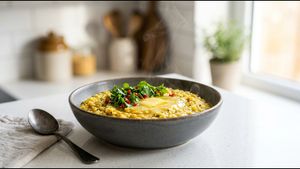 Dal Khichdi Recipe: A Light Comfort Meal Everyone Loves
 -
 From Hashtags to Merch Drops: How Fandom Fashion Became Part of the Story
 -
 ₹1000 Crore and Counting: ‘Dhurandhar 2’ Isn’t Just a Hit, It’s a Box Office Phenomenon
 -
 Akshaya Tritiya 2026 Date: April 19 or 20? Know The Right Day To Buy Gold This Year


Aaarupadaiveedu-Pazhani (Contd)

Significance Of The Temple
Pazhani is situated in Dindugal district of Tamil Nadu in South India.
The temple atop a hill is fashioned on the ancient South Indian architecture. The Pazhani hill is 450 feet high with 690 stone steps. An electric winch also serves the purpose of carrying the devotees up the hill. The temple can also be reached by walking up the 'Elephant path' or 'Yaanai Padhai'.
The presiding deity of the temple of Pazhani is Lord Muruga acclaimed as Lord Dhandaayudhapaani ( the lord with a staff in his hand ). Clad in a loin cloth and with a staff in His hand, He represents His reclusive nature here. The Raja Alankaaram ( Decorating the idol like a king ) represents the fact that the same Lord who is a recluse is also the King of the universe.
The Thiru Aaavinankudi temple at the foot of Pazhani is an integral part of Pazhani temple atop the hill. A dip in the 'Saravana Poigai theertham' or tank and the 'Shanmugha Nadhi' which lied 3 Kms way from Pazhani is said to absolve the sins of the devotees. The temple of Idumban is found half way up the hill.
Festivals And Kaavadi Worship
Panguni Uthiram, Thai Poosam and Kandhar Shashti are celebrated with great grandeur. Apart from these, special worship is attributed on the day of the Kirthika star and Shashti day very month.
The Kavaadi culture or the Kaavadi worship is said to have spread from Pazhani.
Devotees make their way to Pazhani by foot with Kaavadis slung across their shoulder. The Kaavadis also contain small pots filled with jaggery or milk of which jaggery will be used to make the Panchamirtham to be smeared on the idol and the milk to bathe the idol.
It is believed that people in the early days also carried the Machcha Kavadi that constituted fish and the Sevar Kavadi which constituted chicken. It is believed that the cooked rooster in the Sevar Kavadi of an ardent devotee who had strictly followed the rules of worship sprung with life when the pot was opened in front of the deity displaying the omnipotence of the Lord.
It is an undeniable fact that the Kaavadi worship bestows the abounding grace of the Lord to this day.
Spiritual Significance
One can derive the spiritual significance of the manifestation of Lord Muruga in Pazhani from the legend of the manifestation. He was addressed by Lord Shiva and Goddess Parvati as “Pazham Nee" which meant that He himself was the ripe fruit of Wisdom. Upon realizing the fact the anger vanished and He blissfully settled on the hilltop.
The philosophy states that true wisdom or self realization is not to be acquired anywhere outside oneself but to understand the fact that it is available within oneself shinning as the true self. The realization of the fact results in supreme bliss.
Hence lets worship Lord Dhandaayudhapaani to bless us with His bliss.


 Continue with Google