




 Click it and Unblock the Notifications


Latest Updates
-
 Your Quick Energy Drink: The Ultimate Banana Shake Recipe
 -
 Horoscope for Today May 20, 2026 - Calm Energy, Steady Progress for All Signs
 -
 Spicy Home Style Chicken Masala Recipe: Your New Favorite Dinner
 -
 Who Is Abhijeet Dipke? The Man Behind India's Viral Cockroach Janta Party
 -
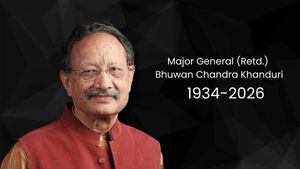 BC Khanduri, Former Uttarakhand CM and Army Veteran, Passes Away at 91
 -
 "Maa, Mujhe Yahan Se Lene Aa Jao": She Begged To Come Home, Nobody Came
 -
 Nachos Recipe: Your Go-To Crunchy Party Snack
 -
 Hacks 101: How To Save Your Makeup When It Starts to Melt
 -
 Always Online, Always Exhausted: Expert Explains The Mental Wellness Cost Of Digital Work Culture
 -
 South Style Meal Vegetable Kurma Recipe: A Flavorful Delight


Akhilesh Yadav Questions Krishna’s First Name In Viral Video, Sparks Debate On Caste And Identity

A casual meeting on a highway in Uttar Pradesh between Samajwadi Party leader Akhilesh Yadav and spiritual storyteller Aniruddhacharya Maharaj known online as 'Pookie Baba' unexpectedly became a viral sensation.
Their short conversation about a simple question concerning Lord Krishna's childhood uncovered bigger discussions about caste, beliefs, and modern identity in India.
A Simple Question That Made Headlines
As Akhilesh Yadav stopped to talk with Aniruddhacharya Maharaj, he asked him about the use of the word "Shudra." Instead of arguing politically, Akhilesh asked softly, "What did Krishna's mother call him the first time?" Aniruddhacharya replied that Krishna was called "Kanhaiya."
"आज के बाद किसी को शूद्र मत कहना"
— Surya Samajwadi (@surya_samajwadi) July 13, 2025
अखिलेश जी ने अनिरुद्धाचार्य को अच्छे से समझा दिया, कथावाचक की बोलती बंद हो गई 😂 pic.twitter.com/nlLTj8XW14
But with a smile and folded hands, Akhilesh disagreed, saying, "This is where our paths diverge. From now on, please don't use the word 'Shudra.'" Though the conversation was brief, the video quickly went viral and left a lasting impression.
The Spiritual Leader's Perspective
Later, during a sermon, Aniruddhacharya addressed the discussion without naming Akhilesh. He explained that people often ask spiritual questions to hear what matches their beliefs. He also said, "God has infinite names-no one can list them all." Using an analogy, he said that when a child is born, people first ask if it is a boy or girl, not the name.
He suggested that Yashoda first lovingly called Krishna "Lala," and only later did affectionate names like Kanhaiya, Nandalala, and Gopal come into use. These names come from love, not formal ceremonies.
What Scriptures Actually Say
According to sacred texts like the Srimad Bhagavatam and Garg Samhita, the story is somewhat different. After Krishna's birth in Mathura, Vasudev carried him across the Yamuna river to Gokul, where he was given to Nandbaba and Yashoda.
A formal naming ceremony took place, where Sage Gargacharya officially named the child "Krishna," which means "the dark one" or "all-attractive." Other names like Vasudeva, meaning "son of Vasudev," also appear and are used in devotion alongside Krishna.

The Names Of Krishna In Everyday Culture
Besides formal names, Krishna's childhood inspired many loving nicknames that are still widely used in India:
- Kanha
- Kanhaiya
- Yashodanandan
- Nandalala
- Gopal
- Makhan Chor
These names show how people related to Krishna not just as a God, but as a playful child, a dear son, and a close friend. In rural North India, it is still common to lovingly call little boys "Lala," just as Yashoda might have called Krishna.
The 108 Names of Krishna
Over time, Lord Krishna came to be known by 108 different names, each reflecting a distinct quality or phase of his life. Some of the prominent names and meanings include:Achala - The immovable one
- Achyuta - The infallible one
- Adbhutah - The one who is wondrous or astonishing
- Adideva - The first or original divine being
- Vasudeva / Vaasudeva - Son of Vasudev; also used to denote Krishna's divine form
- Vishnu - Reflecting his identity as the Preserver in the Hindu trinity
Each name carries significance whether it relates to his role in the Mahabharata, his childhood in Braj, or his status as a divine being in the Vaishnav tradition.
Akhilesh's Larger Point
For Akhilesh Yadav, the conversation was not just about words, it was about rejecting limiting labels. By showing that even a god like Krishna had multiple names and identities, he questioned why modern people should be fixed into caste labels like "Shudra."
His statement, "From now on, don't say Shudra," was a call to move beyond outdated systems of social division.
What This Exchange Tells Us
The talk was more than a political or spiritual debate. It was a meeting point where mythology clashed with efforts for social change. Aniruddhacharya emphasized the emotional and cultural traditions around Krishna's story. Akhilesh used the same story to invite people to rethink caste hierarchy and promote inclusion. This sparked an important question for many viewers: How do we handle traditions that don't align with today's social values?

In the end, the debate about Krishna's first name isn't about who is right or wrong. It's about how we understand and interpret tradition in today's world. Whether one believes Yashoda first called him "Lala" or follows the scriptures naming him "Krishna," the key lesson is that names carry meaning but meanings change with time. Perhaps the most important message is that every identity, human or divine, deserves freedom beyond simple labels.

 Continue with Google