




 Click it and Unblock the Notifications


Latest Updates
-
 Chana Masala Recipe: Experience Dhaba Style Authentic Taste
 -
 Struggling With Oily Skin This Summer? Simple Tips to Keep Shine Under Control
 -
 Garlic Bread Recipe: The Cheesy Bakery Style Trick You Need
 -
 Soha Ali Khan Swears By This ‘Gentle Game-Changer’ Lemon Drink for Gut Health: Full Recipe Inside
 -
 World Health Day 2026: You’re Not As Healthy As You Think—Here’s Why
 -
 One Pot Easy Lunch Recipe: Flavorful Veg Pulao
 -
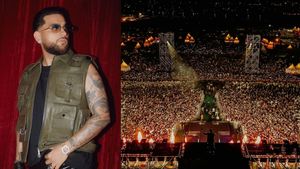 Karan Aujla India Tour Controversy: Lucknow and Ludhiana Shows Cancelled—What Went Wrong?
 -
 Kissing Disease Linked to 3x Higher Risk of Multiple Sclerosis: What You Should Know
 -
 Feeling Drained in the Heat? 10 Healthy Drinks to Sip This Summer
 -
 Happy Birthday Rashmika Mandanna: Steal Her White Looks For Easter 2026 Festive Parties And Celebrations


Lead From Front To Be A Successful Leader


The successful leaders display more decisive behaviour, spending less time following others and acting more quickly than the others in the group. They always attempt to lead from the front.
"It was interesting to find that the most effective leaders remained on the edges of the group and attempted to lead from the front. You''d think leaders in the centre of the group should interact more often with others and therefore be more effective but here this wasn't the case," says Jolyon Faria, the lead researcher of the study.
"For instance, a better understanding of human crowd behaviour can help us design buildings more effectively for evacuation scenarios. It can also inform strategies for moving large numbers of people, useful for events where large crowds need to be moved as quickly and efficiently as possible by a relatively small number of event staff," says Faria, another expert.
To reach the conclusion, the research team, funded by the Biotechnology and Biological Sciences Research Council (BBSRC), asked groups of eight students to walk around continuously in a specified area and remain as a group without speaking or gesturing to one another.
One person was asked to move towards a target, whilst remaining a member of the group, without letting the others know that he or she was leading them to a target. In a second set of experiments, the students were told to follow "the leader", but not told who the leader was.
In the second set of experiments, it was found that those leaders who remained on the edge of the group were able to move their group towards a target much more quickly than the leaders that chose to remain in the centre.
The researchers say that they wanted to find out the methods people decided who to follow, says Faria. They could find that people were able to identify their leader by what position the leader takes, even when the leaders do not signal their identity.
'This research could illustrate the general principle behind group behaviour. If applied, it could help in the management of the natural as well as the urban environment management,' thinks the experts.


 Continue with Google