




 Click it and Unblock the Notifications


Latest Updates
-
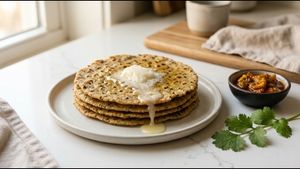 Missi Roti Recipe: A Taste of Traditional Punjabi Flavor
 -
 Top 6 Smart Space-Saving Home Office Furniture Picks for a Compact Metro Residence
 -
 Soft Bakery Style Sponge Vanilla Cake Recipe
 -
 7 Smart Ways To Eat Mango Without Overheating Your Body
 -
 Labour Day 2026: Expert Shares How Managers Can Reduce Employee Stress During High-Pressure Periods
 -
 Gujarati Comfort Classic: Your Ultimate Dal Dhokli Recipe
 -
 What To Watch This Week (April 27–May 3): New OTT Releases Across Netflix, JioHotstar, Prime Video, & More
 -
 Happy Labour Day 2026: Wishes, Quotes, And Messages for Colleagues, Employees
 -
 Buddha Purnima 2026: 50+ Wishes, Quotes, Messages, Status & Posts for WhatsApp, Facebook & Instagram
 -
 Flower Full Moon 2026: 5 Powerful Manifestation Rituals To Reset Energy And Attract New Beginnings


Sixth Taste To Detect Fat


You don't need a machine to tell you your fat percentage. An Australian study has revealed that humans have a sixth taste by which they can detect fat.
Deakin University have found that humans can identify the taste of fat by its chemical composition, rather than by its texture.
This sixth taste contributes in keeping your body in shape. People who are highly sensitive to the taste of fat tend to eat less of it, and hence have significantly lower body mass indexes.
"Fat has a very nice mouth feel to it [but it] appears that fat is activating something in the oral cavity independent of texture," says researcher Russell Keast.
To prove the believe, Dr Keast and his team had a group of people sample various types of fatty acids found in common foods, mixed in with non-fat milk, which changed it's texture.
Of the 33 people tested, all could detect the taste of fat to a varying degree, he confirmed. These findings could lead to new ways of treating obesity.
Fat flavour were now be added to the other known tastes like sweet, salt, sour, bitter, and umami - a taste for protein-rich foods.
Dr Keast reported, the degree of sensitivity to fat differed between individuals.
"I may be very sensitive to sweet tastes, while somebody else may be insensitive, this is common throughout the tastes, and it's exactly what we're finding with fat," he said.
After the research group had proved that humans could taste fat, they now wanted to know if the ability to taste fat had any influence on what people ate.
Study participants were divided into two groups, one who were sensitive to the fat taste, and those who were not.
Daily diets of both groups were checked and found those people who were hypersensitive to fat ate less of it in their daily diet. They also had lower body mass indexes.
The opposite was the case with people who were not sensitive to the taste.
Dr. Keast is now researching, why some people are sensitive and others are not.

 Continue with Google