




 Click it and Unblock the Notifications


Latest Updates
-
 From Water Fights to Egg Games: Unique Easter Monday Traditions Explained
 -
 South Indian Perfect Texture Coconut Chutney Recipe
 -
 Horoscope for Today April 06, 2026 - Practical Steps Bring Calm Progress
 -
 Chana Masala Recipe: Experience Dhaba Style Authentic Taste
 -
 Struggling With Oily Skin This Summer? Simple Tips to Keep Shine Under Control
 -
 Garlic Bread Recipe: The Cheesy Bakery Style Trick You Need
 -
 Soha Ali Khan Swears By This ‘Gentle Game-Changer’ Lemon Drink for Gut Health: Full Recipe Inside
 -
 World Health Day 2026: You’re Not As Healthy As You Think—Here’s Why
 -
 One Pot Easy Lunch Recipe: Flavorful Veg Pulao
 -
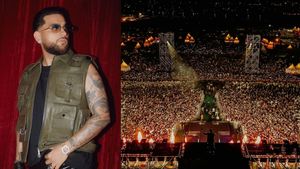 Karan Aujla India Tour Controversy: Lucknow and Ludhiana Shows Cancelled—What Went Wrong?


A Revolutionary Face Recognition Device


The revolutionary gadget, according to the engineers, work in a simple concept. Lin Huang, from the university's Department of Engineering, says that every face has special features that define people, yet faces can also be very similar. The researcher adds that this is what makes computerized face recognition for security and other applications an interesting, but difficult, task.
According to the researcher, some thing like that - a face recognition softwares have existed for years' now, but the problem with all the earlier days software had many technical glitches. The system, according to them, were accurate, but needed a lot of computer problem, which some how became a big hinderance.
As compared to the earlier face recognition systems, which marked major facial features, like the eyes, nose mouth, the new system, breaking all other prototypes, will have a one-dimensional filter to the two-dimensional data from conventional analyses, such as the Gabor method (which is based on neural networks).
This allows them to reduce significantly the amount of computer power required without compromising accuracy. The team tested the performance of their new algorithm on a standard database of 400 images of 40 subjects. Images are grey scale and just 92 x 112 pixels in size.
They found that their technique was not only faster and worked with low resolution images, such as those produced by standard CCTV cameras, but it also solved the variation problems caused by different light levels and shadows, viewing direction, pose, and facial expressions.
It could even see through certain types of disguises, such as facial hair and glasses.
AGENCIES


 Continue with Google