




 Click it and Unblock the Notifications


Latest Updates
-
 National Anti-Terrorism Day 2026: How Rajiv Gandhi’s Assassination Sparked A Nationwide Call For Peace
 -
 International Tea Day 2026: Here's What Drinking Tea First Thing In The Morning Does To Your Gut
 -
 Horoscope for Today May 21, 2026 - Curiosity Rises, Plans Shift
 -
 Paneer Lababdar Recipe: Creamy Restaurant-Style Curry Made Easy
 -
 Mouni Roy’s Cannes 2026 Patola Gown Took 300 Hours To Craft — The Story Of Gujarat’s GI-Tagged Weave
 -
 Bread Pizza Recipe: Your Instant Snack Hack
 -
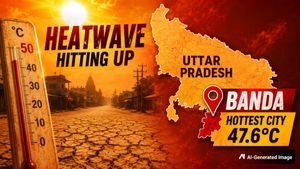 India's Hottest City Hit 47.6°C Today — This Is What Heatstroke Looks Like
 -
 Exclusive: Rubina Dilaik Said Yes To The Ward In Seconds: Here's The Raw Truth Behind Why
 -
 PM Modi Turns Viral ‘Melodi’ Nickname Real With Melody Gift To Meloni, Inside India’s Iconic Toffee Origin
 -
 Superglue, A Potato, A Plastic Bag: The Dangerous DIY Contraception Cases That Shocked Doctors


GPS gadgets trace your mode of transport


The researchers believe that such potential applications may allow people to analyse and improve their own lifestyles, and share useful data with others. A research team in Beijing, led by Yu Zheng, has already devised a way to guess what mode of transport a person uses for reaching his/her workplace just on the bases of GPS trace alone.
For their work, the researchers recorded traces from 45 people who carried GPS-enabled gadgets over 6 months. They also recorded the volunteers' modes of transport for the more than 20,000 kilometres travelled in total.
Upon an analysis, the researchers found that the knowledge about people's speed was not enough to predict their mode of transport, as unpredictable factors like traffic congestion could confuse matters.
With a view to overcoming such confusions, the researchers developed statistical methods to improve the accuracy of predictions that suggested, for example, that a person moving quickly at the start of a trip might be travelling by a car.
The researchers further said that when the pace slackens suddenly to a speed that could be read as walking or cycling, the assumption would be that the person was on foot. They said that tracking studies had shown that people rarely shifted their mode of transportation from car to bicycle.
They added that transitions from driving to buses tended to be divided by a period of walking, as the person travels from the parked vehicle to the bus stop. Zheng said that such systems might help people know about traffic congestion hotspots, popular travel routes and destinations, and traffic conditions at a particular time.
Michael Peterson, Chair of the International Cartographic Association Commission on Maps and the Internet, hailed Zheng and his colleagues' work as "a major accomplishment". He, however, expressed concerns about the privacy implications of such technologies.
"Displaying the mode of transportation on a map in a GeoLife-like application so that users can compare their movements is innocent enough. The problem is that there are more sinister applications of this technology," New Scientist magazine quoted him as saying. He said that researchers at and other organisations better ensure that their products are designed to protect users.
A paper on the new transport-mode predicting software was presented at the 2008 World Wide Web Conference in Beijing, China.

 Continue with Google