




 Click it and Unblock the Notifications


Latest Updates
-
 Varada Chaturthi 2026: Significance, Puja Timings, Rituals And Why Devotees Avoid Seeing The Moon
 -
 Is Your Mango Safe To Eat? Seven Warning Signs To Check Before You Bite
 -
 Your Quick Energy Drink: The Ultimate Banana Shake Recipe
 -
 Horoscope for Today May 20, 2026 - Calm Energy, Steady Progress for All Signs
 -
 Spicy Home Style Chicken Masala Recipe: Your New Favorite Dinner
 -
 Who Is Abhijeet Dipke? The Man Behind India's Viral Cockroach Janta Party
 -
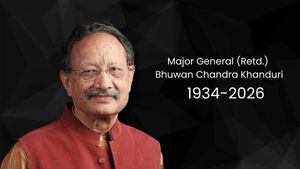 BC Khanduri, Former Uttarakhand CM and Army Veteran, Passes Away at 91
 -
 "Maa, Mujhe Yahan Se Lene Aa Jao": She Begged To Come Home, Nobody Came
 -
 Nachos Recipe: Your Go-To Crunchy Party Snack
 -
 Hacks 101: How To Save Your Makeup When It Starts to Melt


National Education Day 2025: How One Man’s Vision Shaped India’s Education System

India observes National Education Day on 11 November to celebrate learning and pay tribute to Maulana Abul Kalam Azad - the nation's first Education Minister after independence. Born on this day in 1888, Azad believed that education was not a privilege for a few, but a basic right that should reach every child.
In 2008, the Government of India chose his birthday to mark this occasion, recognising how deeply his ideas shaped the country's education system. For Azad, knowledge was the real foundation of freedom and that belief continues to echo through generations.
Who Was Maulana Abul Kalam Azad?
Azad wasn't only a freedom fighter and scholar; he was a reformer who saw education as the heart of a developing nation. When he took charge as Education Minister in 1947, India had enormous gaps in literacy and access.

He established key institutions such as the University Grants Commission (UGC) and the All India Council for Technical Education (AICTE), and pushed for universal primary education and scientific learning. His vision was to create citizens who could think critically, build responsibly, and carry India forward with confidence.
How The Day Came To Be
The Ministry of Human Resource Development (now the Ministry of Education) officially declared 11 November as National Education Day in 2008. Across schools and universities, the day is marked through discussions, workshops, essays, and debates on what education really means. It's a space for students and teachers to exchange ideas, question systems, and look at how learning can become more inclusive and relevant.
Why It Still Holds Meaning
In 2025, the relevance of Maulana Azad's ideas feels sharper than ever. India continues to face gaps in quality, access, and equity. Technology has changed classrooms, yet not every child has access to it.
Education today needs to go beyond scores and degrees. It should nurture curiosity, empathy, and resilience, qualities that define a thoughtful and capable generation. National Education Day reminds us to examine whether we're truly creating those opportunities.
Carrying His Vision Forward
Celebrating this day goes beyond speeches and events. It's about how we teach, how we learn, and how we think. Teachers can bring creativity into their classrooms. Institutions can value understanding as much as grades. Parents can encourage children to explore, not just memorise. Each small step adds up to the kind of nation Maulana Azad envisioned, one that values knowledge as deeply as freedom.
National Education Day is a moment to look back and look ahead, to honour a man who saw learning as India's strongest weapon for progress. Maulana Azad's vision still lights the path: education that is inclusive, forward-looking, and rooted in equality. The future of India depends on how we nurture its learners today.

 Continue with Google