




 Click it and Unblock the Notifications


Latest Updates
-
 Lemon Chicken Recipe: A Tangy Flavor Burst Delight
 -
 West Bengal Election Results 2026: The Simple Reason Mamata Banerjee Always Wears Hawai Chappals
 -
 Tamil Nadu Election Results 2026: As TVK Leads, Know Thalapathy Vijay’s Real Name, Family And Net Worth
 -
 Street Style Kolkata Wrap Egg Roll Recipe: Your New Favorite Snack
 -
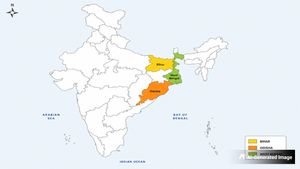 The Conquest of Anga, Banga and Kalinga: BJP's Historic Sweep of Eastern India
 -
 UTIs In Summer: Why Women Are More Vulnerable And How To Stay Safe
 -
 Hacks 101: How to Prevent Inner Thigh Chafing Without Fancy Products
 -
 Agni Nakshatram 2026: Solar Transit Dates, Mythological Origins And Why Temperatures Peak During This Time
 -
 Met Gala 2026: Every Indian Celebrity Rumoured to Attend Fashion's Biggest Night
 -
 Kabuli Chana Recipe: Your Go-To Protein Rich Curry


Modishree vs Joy Bangla: Inside Bengal’s Political Sweet Wars During West Bengal Election Result Day

Walk into a sweet shop in Kolkata or anywhere across Bengal during election counting season, and the usual trays of rasgulla and sandesh start looking a little different. Alongside them appear sweets with names like Modishree and Joy Bangla. They are not traditional Bengali desserts. They are seasonal, politically themed creations that show how deeply elections spill into everyday culture here.
What Modishree And Joy Bangla Actually Are
Modishree and Joy Bangla are election-season sweet variants, made by local confectioners in West Bengal. They are not part of Bengal's traditional sweet history and have no GI tag or official cultural classification.
Modishree is a saffron-toned sweet, usually based on sandesh or rasgulla. The name draws from Prime Minister Narendra Modi and reflects saffron political symbolism.

Joy Bangla is typically green-toned, inspired by the slogan widely associated with the Trinamool Congress in West Bengal politics.
Note: These sweets are shop-level innovations, not official political products or endorsed items.
Not Just Campaigns, But Counting Day Culture
A key detail often missed is timing. These sweets are not just campaign-time gimmicks. Reports show they are most actively produced around election result or counting day.
Sweet shops prepare batches in advance, anticipating demand from supporters and party workers who use sweets to mark outcomes. In many cases, production adjusts based on the political mood after results begin to take shape.
A Wider Palette Of Political Sweets In Bengal
Modishree and Joy Bangla are part of a larger pattern in Bengal, where sweets reflect political colours:
- Saffron sweets linked to BJP symbolism
- Green sweets associated with TMC identity
- Red-themed sweets inspired by Left slogans like "Lal Salam"
So what looks like a face-off between two sweets is actually part of a broader political colour palette in Bengali confectionery culture.
Built On Traditional Sweets, Not New Recipes
Another important detail: these are not new desserts in terms of structure.
Most of these political sweets are based on:
- rasgulla
- sandesh
- rajbhog
The changes are mostly visual and flavour-based:
- colour (saffron, green, red)
- mild flavour additions like kesar or gondhoraj lime
So what changes is not the dessert itself, but its presentation and naming.
Why Sweet Shops Do This
This trend is not officially driven by political parties. It comes from sweet shop owners responding to what draws attention during high-energy public moments.
Legacy confectioners in Bengal have been known to:
- prepare thousands of pieces before counting day
- customise colours based on demand trends
- adapt quickly after results to match public sentiment
- For many shop owners, it is also about visibility and staying part of the cultural conversation.
Some even describe it as a way of celebrating democracy through food, where sweets become part of public expression rather than political messaging.
How Food Becomes A Political Language
In Bengal, food often carries meaning beyond taste. Sweets in particular become a way to reflect identity, mood, and public sentiment.
Modishree vs Joy Bangla fits into this pattern. The colours, names, and timing all turn a simple dessert into a symbolic object. No slogans are needed on the street when they are already sitting in a sweet box.
Conclusion
Modishree and Joy Bangla are not traditional Bengali sweets, and they are not official political products either. They sit in a very specific space - between commerce, culture, and election excitement.
What they really show is simple: In Bengal, even something as familiar as a rasgulla can change meaning depending on the moment. During elections, food doesn't just stay on the plate. It becomes part of how people mark time, identity, and outcome.

 Continue with Google