




 Click it and Unblock the Notifications


Latest Updates
-
 World Parkinson’s Day 2026: Date, History, Significance, and Why It Matters
 -
 Masala Chai Recipe: The Perfect Kadak Tea Formula
 -
 Horoscope for Today Apr 11, 2026 - Small Choices, Steady Progress
 -
 Inside Anant Ambani’s 31st Birthday Bash: Celebrities, Live Performances, And Large-Scale Seva Across India
 -
 Paneer Masala Recipe: Unveiling the Rich Gravy Secret Method
 -
 Fashion Hacks 101: From Hourglass To Broad, Saree Styling That Actually Flatters Every Body Type
 -
 Veg Momos Recipe: The Street Style Juicy Filling Trick Revealed
 -
 World Parkinson’s Day 2026: How to Tell If a Tremor Is Parkinson’s or Something Else
 -
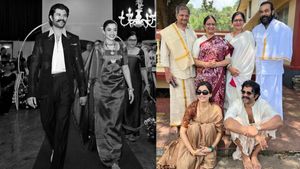 Rashmika Mandanna’s 30th Birthday Celebrations In Coorg Felt Like A Deeply Rooted Kodava Homecoming Moment
 -
 A Rs 5 Crore Handbag Made from T-Rex Leather? The Internet Can’t Look Away


Jyotirao Phule Jayanti 2026: The Man Who Opened Classrooms India Tried To Keep Shut For Many

Most people remember a teacher who changed the way they saw the world. Now imagine a time when entire sections of society were denied even the chance to enter a classroom. No books, no access, no voice. That was the reality in 19th-century India and that's the reality Mahatma Jyotirao Phule decided to challenge. On his birth anniversary, it's worth looking beyond the name and asking: what exactly did he change, and why does it still feel relevant today?
Who Was Jyotirao Phule?
Born on 11 April 1827 in Pune, Jyotirao Phule grew up in a society structured by rigid caste rules. Coming from a Mali community, he experienced exclusion early in life. Instead of accepting it, he questioned it.

He went on to become one of India's earliest voices pushing for social equality, education, and dignity for those kept at the margins. His work didn't stay limited to ideas-he built institutions, wrote extensively, and created spaces that directly challenged the system.
Jyotirao Phule Started Where It Mattered Most: Education
In 1848, Phule and his wife Savitribai Phule opened a school for girls in Pune.
This wasn't a small step. At the time:
- Girls' education was widely opposed
- Lower-caste children were not allowed access to learning
The two didn't just open one school. They went on to start more institutions for girls and children from oppressed communities. Their belief was simple: education changes who gets to participate in society.
Jyotirao Phule Challenged Caste, Not Just Talked About It
Phule didn't soften his critique of the caste system. He directly questioned the structures that kept power concentrated in a few hands.
He spoke about:
- Social inequality
- Untouchability
- The exclusion of entire communities from basic rights
At a time when these ideas were rarely voiced publicly, his stance stood out. He wasn't working within the system, he was asking people to rethink it entirely.
Satyashodhak Samaj: Organising For Change
In 1873, he founded the Satyashodhak Samaj (Society of Truth Seekers).
The goal was clear:
- Build a society based on equality
- Remove caste-based barriers
- Promote rational thinking over blind tradition
This gave people a way to organise, question, and push back collectively-something that made the movement stronger and more visible.
Jyotirao Phule's Work For Women Went Beyond Education
Alongside education, Phule worked on issues that affected women directly:
- Supported widow remarriage
- Helped create shelter for vulnerable women
- Spoke against practices that limited women's independence
Working closely with Savitribai, he helped lay the foundation for women's rights conversations in India long before they became mainstream.
Writing That Questioned The System
Phule also used writing as a tool. His book Gulamgiri (1873) examined caste oppression and social inequality.
He didn't write for comfort, he wrote to provoke thought. His work pushed readers to question accepted norms and look at society more critically.
Why Jyotirao Phule's Ideas Still Matter
It's easy to place historical figures in the past and move on. But Phule's work keeps showing up in present-day conversations.
Questions around:
- Who has access to education
- Who gets opportunities
- How social structures shape lives
...are still very much part of everyday reality.
His approach-use education, question inequality, organise for change continues to be relevant because the issues haven't completely disappeared.
Jyotirao Phule's 199th Birth Anniversary
In 2026, India marks his 199th birth anniversary.
This year also leads into an important milestone:
- 2027 will mark his 200th birth anniversary (bicentenary)
So this isn't just another yearly remembrance. It's part of a larger moment of reflection on how far we've come and what still needs work.
To wrap up, Jyotirao Phule didn't wait for society to change on its own. He stepped in, challenged it, and built alternatives where none existed. From opening classrooms to questioning deeply rooted hierarchies, his work was practical, direct, and deeply human.
His legacy isn't just about what he did in the 1800s. It shows up every time someone gets access to education they were once denied, every time inequality is questioned, and every time change begins with one person deciding things don't have to stay the same.


 Continue with Google