




 Click it and Unblock the Notifications


Latest Updates
-
 Horoscope for Today April 05, 2026 - Small Choices Guide Calm Momentum
 -
 Happy Easter 2026 Wishes: Top 50+ Messages, Status, Captions And Posts To Share With Family And Friends
 -
 Comfort Style Creamy Blend Tomato Soup Recipe
 -
 Rashmika Mandanna’s “Now It’s Us Three” Post Sparks Speculation Ahead of Anime Awards 2026 Return
 -
 The Softest Ever Homemade Gulab Jamun Recipe
 -
 Where To Eat This Easter 2026: From Chef-Led Experiences To Traditional Feasts Across India
 -
 International Carrot Day 2026: The Hydrating, Skin-Loving Vegetable To Eat More This Summer
 -
 Fluffy Jeera Rice Every Time: The Simple Trick You Need To Know
 -
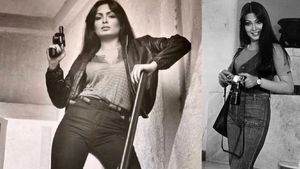 Parveen Babi 72nd Birth Anniversary: When A Modern, Unapologetic Style Icon Took Over Bollywood
 -
 5.8 Magnitude Earthquake In Afghanistan Sends Tremors To Delhi: Why Deep Quakes Travel Across Borders


Guru Randhawa's 'Azul' Music Video: Sexualization Of Schoolgirls In Songs? Where Do We Draw The Line?

When Punjabi pop sensation Guru Randhawa sang Lagdi Lahore Di Aa, a track that later featured in Shraddha Kapoor and Varun Dhawan's Street Dancer 3D (2020), it became an instant cultural anthem. Its playful lyrics, catchy hook, and youthful energy resonated across borders, even offering a small reminder of the shared cultural thread that still binds Punjabis on both sides. The song was joyful, spirited, and celebratory-a classic example of how music can unify while entertaining.
Fast forward to 2025, Randhawa's latest release 'Azul', a music video, has sparked widespread controversy-not for its beats, but for its visuals. In the video, Randhawa plays a photographer at a school, eyeing a schoolgirl during a photoshoot. The camera lingers suggestively on her legs, a lollipop becomes symbolic, and soon the lyrics liken her to premium liquor brands like Don Julio, Hennessy, and Azul tequila.
By equating the fetishization of a minor with the indulgence of luxury alcohol, the video dangerously glamorises predatory desire, sparking an urgent conversation.

Here's why the sexualization of schoolgirls in music videos like Azul is not just problematic but also a serious safety issue.
1. Blurring Line Between Innocence And Adult Fantasy
The use of a school uniform instantly frames the girl as a minor. By casting her in a sexualized light, the video blurs the critical line between innocence and adult fantasy. This kind of portrayal is not simply "artistic expression"-it directly feeds into the fetishization of children, normalizing a dangerous conflation of girlhood and sexual desirability.
2. Normalising Predatory Power Dynamics
In Azul, Randhawa plays the role of a school photographer, an adult in a position of authority, while the girl is a student. Romanticizing this imbalance reinforces predatory narratives where adults can exploit minors under the guise of attraction. Pop culture has immense influence, and when such imagery is glamorized, it risks desensitizing audiences to real-world abuse of power.
3. Linking Minors To Alcohol Culture
Equating a schoolgirl with premium liquor brands is not just tasteless-it's a cultural red flag. Associating underage femininity with alcohol consumption glamorises both underage desire and intoxication. It promotes the idea that desiring minors is as aspirational as sipping on luxury drinks, a message that is not only irresponsible but deeply harmful to impressionable viewers.
4. Reinforcing Harmful Gender Stereotypes
The video also reinforces the outdated stereotype that a girl's value lies in her ability to seduce, even in contexts where it is inappropriate. By sexualizing a schoolgirl, it sends a toxic message that girls-even children-are objects of desire to be consumed. For young audiences, this can distort ideas of self-worth, consent, and identity.
5. Impact On Young Viewers And Society
Music videos like Azul are widely accessible, and children are often among the audience. Seeing their age group sexualized in mainstream media can cause confusion, anxiety, and pressure to imitate adultized behavior. On a societal level, such portrayals normalize dangerous fantasies and diminish the urgency of safeguarding children from predatory attitudes.
Artists wield enormous influence, and with that comes responsibility. If pop culture continues to normalize the fetishization of schoolgirls, it risks shaping generations that see predatory behavior as entertainment. It is time to ask: where do we draw the line, and who will hold it firm?


 Continue with Google