




 Click it and Unblock the Notifications


Latest Updates
-
 Happy Birthday Rashmika Mandanna: Steal Her White Looks For Easter 2026 Festive Parties And Celebrations
 -
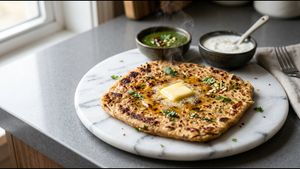 Paneer Paratha Recipe: Crispy Outside, Soft Inside Perfection
 -
 Horoscope for Today April 05, 2026 - Small Choices Guide Calm Momentum
 -
 Happy Easter 2026 Wishes: Top 50+ Messages, Status, Captions And Posts To Share With Family And Friends
 -
 Comfort Style Creamy Blend Tomato Soup Recipe
 -
 Rashmika Mandanna’s “Now It’s Us Three” Post Sparks Speculation Ahead of Anime Awards 2026 Return
 -
 The Softest Ever Homemade Gulab Jamun Recipe
 -
 Where To Eat This Easter 2026: From Chef-Led Experiences To Traditional Feasts Across India
 -
 International Carrot Day 2026: The Hydrating, Skin-Loving Vegetable To Eat More This Summer
 -
 Fluffy Jeera Rice Every Time: The Simple Trick You Need To Know


A Sweet Slice Of History From 1883 : Who Baked India’s First Christmas Cake?

In the charming coastal town of Tellicherry (now Thalassery) in Kerala, history was baked, quite literally, in the late 1800s. It all began with Murdoch Brown, affectionately known as Brown Saip, a visionary British plantation manager, and Mambally Bapu, a talented local baker.

Together, they created India's first Christmas plum cake, blending the warmth of Indian spices with the tradition of British baking. This wasn't just a culinary experiment; it was the beginning of a legacy that has sweetened Indian Christmas for nearly 140 years.
The Story Behind the First Cake
Murdoch Brown was no ordinary colonial figure. He managed the Anjarakandy Cinnamon Estate, Asia's first cinnamon plantation, and was respected for his progressive outlook. He was deeply involved in the community, mentoring local entrepreneurs and fostering cultural exchanges.
Enter Mambally Bapu, a skilled baker who had mastered the art of baking during his time in Burma. Upon his return, he set up the Royal Biscuit Factory in Tellicherry in 1880. The factory quickly gained fame for its biscuits and rusks, beloved by locals and even shipped abroad for soldiers.
In 1883, Brown Saip approached Bapu with a special request-to recreate the traditional English plum cake for Christmas. Bapu took up the challenge, giving the classic recipe a local twist. He replaced European ingredients with Indian counterparts: raisins, dates, and cocoa mingled with a medley of spices, while toddy was used for fermentation. The result? India's first Christmas cake-a decadent treat that captured the essence of both cultures.
A Legacy Beyond Baking
The success of the Royal Biscuit Factory didn't end with cakes. Its wide range of biscuits and rusks became a staple for soldiers stationed overseas, and its reputation only grew during World War II, with figures like Major Cariappa being ardent fans.
Meanwhile, the Mambally family extended their legacy beyond baking. They made a mark in cricket, excelling in Ranji tournaments, while their bakeries continued to innovate and expand across Kerala. To this day, their name is synonymous with tradition, quality, and a touch of nostalgia.
A Reunion Across Generations
Fast forward to modern times, and the story of the first cake took a heartfelt turn. Paul Brown, a descendant of Murdoch Brown, discovered his family's connection to the Mamballys and set out to Kerala to retrace his ancestor's steps. His visit included stops at the Anjarakandy Plantation and the St. John's Anglican Church Cemetery, where his ancestors were laid to rest.
The tale of India's first Christmas cake is much more than a baking milestone; it's a story of people, passion, and the beauty of cultural collaboration. Brown Saip's vision and mentorship, coupled with Mambally Bapu's ingenuity, created a timeless recipe for connection and legacy.
As the Mambally family continues to bake their way through history, and the Brown descendants honour their intertwined heritage, this simple cake remains a symbol of unity, creativity, and the magic of shared traditions.


 Continue with Google