




 Click it and Unblock the Notifications


Latest Updates
-
 Horoscope for Today April 07, 2026 - Small Choices, Big Progress
 -
 Rich Home Style Masala Chicken Gravy Recipe
 -
 Viral IIT Baba Abhay Singh Secretly Marries Engineer Pratika, Netizens Question His Spiritual Path
 -
 Karishma Tanna and Husband Varun Bangera Share Pregnancy News With Fun Photoshoot, Call Baby ‘Little Miracle’
 -
 Why Women Leaders Are Crucial for Driving Change in India’s Healthcare Sector
 -
 Who Is Bhoomika Yadav? Meet Raipur’s 19-Year-Old, Youngest Indian Model To Walk For Chanel
 -
 Super Crispy Street Style Aloo Tikki Recipe: Your New Favorite Snack!
 -
 Baisakhi 2026: Date, History, Rituals and Cultural Significance Explained
 -
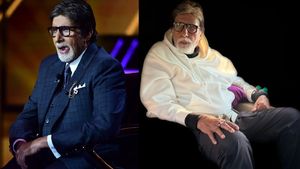 At 83, Amitabh Bachchan Finds Not Working Each Day Disturbing: Why Breaking Routine Triggers Anxiety
 -
 Alia Bhatt Serves Sharp, Subtle Drama in Gaurav Gupta’s Black Three-Piece Tuxedo


Mission To Extend To Blind


If all goes well, a large number of less people may witness next year's Diwali exploiting the technology now available in the USA only, which costs 800 dollars.
Dr.Debabrata Basu, Head of the Department, Oxide and Bio-ceramic section,CGCRI, informed that 50 patients received implants at the Disha Eye Hospital, Barrackpore and were doing well.
He said the Hydroxyapatite was artificially prepared in the laboratory in the form of an ellipse and then put inside the less eye.
"We have transferred the technology to IFGL Bio-ceramics Ltd. for commercialisation and the eyeballs would be available in the market soon, priced between Rs 1000 and Rs 2000," the doctor observed.
Affirming faith on research to empower the eyeballs with , he said, "We are now trying to see whether we can give these implants a solar coating and restore sight." In India, there are nearly 15 million blind people and many of them are one-eyed.
The present demand of ocular implant was met by glass, coral or polymer, but these were not only expensive, they also had several post-operative disadvantages, Dr Basu maintained.
"For instance, they don't provide mobility to the eye. And a person has to go on living with the stigma that is associated with a one-eyed person in society," he opined.
Dr Basu claimed that different reputed organisations of India like the All India Institute of Medial Sciences (AIIMS) and the Institute of Nuclear Medicine and Allied Sciences, New Delhi, were eager to use this technology on patients.
"We were first approached by the Blind Association to come up with something like this and our effort is largely to give them social acceptability," the doctor maintained.
Dr Abhijit Sen, noted eye-specialist of Kolkata, when asked to comment on the new findings, said the research of CGCRI would definitely have an impact on eyecare in the city.
"We are now awaiting eagerly the result of the research on restoring sight," Dr Sen remarked.
Medicos engaged in other fields, also welcomed the research of CGCRI and refuted the charge of the state healthcare "going to the docks."


 Continue with Google