




 Click it and Unblock the Notifications


Latest Updates
-
 Horoscope for Today April 05, 2026 - Small Choices Guide Calm Momentum
 -
 Happy Easter 2026 Wishes: Top 50+ Messages, Status, Captions And Posts To Share With Family And Friends
 -
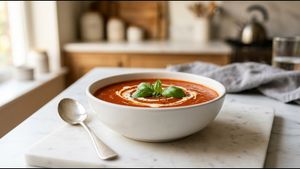 Comfort Style Creamy Blend Tomato Soup Recipe
 -
 Rashmika Mandanna’s “Now It’s Us Three” Post Sparks Speculation Ahead of Anime Awards 2026 Return
 -
 The Softest Ever Homemade Gulab Jamun Recipe
 -
 Where To Eat This Easter 2026: From Chef-Led Experiences To Traditional Feasts Across India
 -
 International Carrot Day 2026: The Hydrating, Skin-Loving Vegetable To Eat More This Summer
 -
 Fluffy Jeera Rice Every Time: The Simple Trick You Need To Know
 -
 Parveen Babi 72nd Birth Anniversary: When A Modern, Unapologetic Style Icon Took Over Bollywood
 -
 5.8 Magnitude Earthquake In Afghanistan Sends Tremors To Delhi: Why Deep Quakes Travel Across Borders


Covid Virus May Survive For 30 Days On Refrigerated, Frozen Meat: Study

The SARS-CoV-2 virus, which causes COVID-19, may survive on meat and fish products in the refrigerator or the freezer for up to 30 days, a study suggests. The research, recently published in the journal Applied and Environmental Microbiology, was conducted using chicken, beef, pork, and salmon, and surrogate viruses with spikes similar to those on SARS-CoV-2.

The researchers stored the meat and fish products at both refrigeration (4 degrees Celsius) and freezer temperatures (minus 20 degrees C).
"Although you might not store meat in the fridge for 30 days, you might store it in the freezer for that long," said study first author Emily S. Bailey, an assistant professor at Campbell University in the US.
"We even found that the viruses could be cultured after (being frozen for) that length of time," Bailey said in a statement. The researchers undertook the study after learning that COVID-19 outbreaks were occurring in Southeast Asia prior to community transmission.
Reports from those communities "suggested that packaged meat products, produced in areas where SARS-CoV-2 was circulating, could have been the source of the virus," said Bailey.
"Our goal was to investigate whether or not similar viruses could survive in this environment," she said. The research is important because SARS-CoV-2 can replicate within the gut, as well as in the respiratory tract, said Bailey.
In the study, the researchers used one RNA virus with a lipid envelop, and two animal coronaviruses-murine hepatitis virus and transmissible gastroenteritis virus as surrogates.

All three viruses have previously been used as surrogates for SARS-CoV-2, generally with greater reductions in their numbers observed at refrigeration than at freezing temperatures.
The reduction in numbers also varied according to the food item used. "Continuous efforts are needed to prevent contamination of foods and food processing surfaces, worker hands, and food processing utensils such as knives," the researchers noted.
"The lack of, or inadequate, disinfection of these foods prior to packaging needs to be addressed," they added.
Disclaimer: The information provided in this article is for general informational and educational purposes only and is not intended as a substitute for professional medical advice, diagnosis, or treatment. Always seek the advice of your physician or a qualified healthcare provider with any questions you may have regarding a medical condition.


 Continue with Google