




 Click it and Unblock the Notifications


Latest Updates
-
 Horoscope for Today May 21, 2026 - Curiosity Rises, Plans Shift
 -
 Paneer Lababdar Recipe: Creamy Restaurant-Style Curry Made Easy
 -
 Mouni Roy’s Cannes 2026 Patola Gown Took 300 Hours To Craft — The Story Of Gujarat’s GI-Tagged Weave
 -
 Bread Pizza Recipe: Your Instant Snack Hack
 -
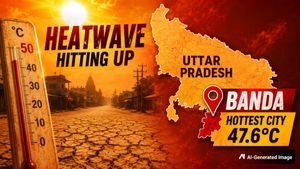 India's Hottest City Hit 47.6°C Today — This Is What Heatstroke Looks Like
 -
 Exclusive: Rubina Dilaik Said Yes To The Ward In Seconds: Here's The Raw Truth Behind Why
 -
 PM Modi Turns Viral ‘Melodi’ Nickname Real With Melody Gift To Meloni, Inside India’s Iconic Toffee Origin
 -
 Superglue, A Potato, A Plastic Bag: The Dangerous DIY Contraception Cases That Shocked Doctors
 -
 One Pot Easy Meal: Delicious Veg Pulav Recipe
 -
 'Melodi' Moment Breaks The Internet: PM Modi Meets Giorgia Meloni In Rome, Colosseum Diplomacy Explained


Why Eradication Of Mosquitoes Is Not The Best Idea
Mosquitoes, who play a major role in various ecosystems, should not be simply wiped out -- instead their ability to transmit diseases should be suppressed, a team of scientists has said.

Mosquitoes, who play a major role in various ecosystems, should not be simply wiped out -- instead their ability to transmit diseases should be suppressed, a team of scientists has said.
Mosquitoes have co-evolved with many species, so there are likely other organisms that depend on them as a food source -- thus wiping out the species may have wider effects, the researchers said.


"To yank (mosquitoes) out abruptly, I don't know what that does as they are a large part of the biomass in many ecosystems," Catherine Hill, Professor at the Purdue University in US state of Indiana, said in a statement.
Thus, developing a non-lethal pesticide that will only affect the biology of the mosquito, while reducing its ability to transmit to another host, without killing the species or interfering with other life forms may hold the solution, Hill added.
Further, Hill pointed out that while mosquitoes are in their aquatic stage, they serve as a food source for fish and predatory insects. During this stage, mosquitoes also serve as filter feeders, which results in organic matter being turned over, making them excellent converters in an ecosystem.
In their terrestrial stage, mosquitoes serve as food for birds, bats, salamanders, lizards, frogs and other animals.

Moreover, according to Hill, there are several thousand species of mosquitoes worldwide, with only a small percentage of those species carrying diseases.
But, very little is known about the species that do not transmit disease, so this leaves a lot of unanswered questions concerning what would happen if mosquitoes were wiped out, Hill said.
With Inputs From IANS
Disclaimer: The information provided in this article is for general informational and educational purposes only and is not intended as a substitute for professional medical advice, diagnosis, or treatment. Always seek the advice of your physician or a qualified healthcare provider with any questions you may have regarding a medical condition.

 Continue with Google