




 Click it and Unblock the Notifications


Latest Updates
-
 Happy Easter 2026 Wishes: Top 50+ Messages, Status, Captions And Posts To Share With Family And Friends
 -
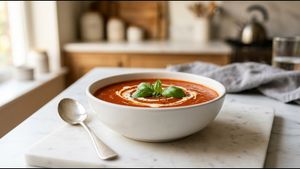 Comfort Style Creamy Blend Tomato Soup Recipe
 -
 Rashmika Mandanna’s “Now It’s Us Three” Post Sparks Speculation Ahead of Anime Awards 2026 Return
 -
 The Softest Ever Homemade Gulab Jamun Recipe
 -
 Where To Eat This Easter 2026: From Chef-Led Experiences To Traditional Feasts Across India
 -
 International Carrot Day 2026: The Hydrating, Skin-Loving Vegetable To Eat More This Summer
 -
 Fluffy Jeera Rice Every Time: The Simple Trick You Need To Know
 -
 Parveen Babi 72nd Birth Anniversary: When A Modern, Unapologetic Style Icon Took Over Bollywood
 -
 5.8 Magnitude Earthquake In Afghanistan Sends Tremors To Delhi: Why Deep Quakes Travel Across Borders
 -
 How to Avoid Getting Sick When Moving Between Heat and AC


Is It The End of Crash Diets? Expert Answers Why Nutrition Is Getting a Reality Check

For decades, diet culture has been the dominant discourse in our thinking about food, weight, and health. This culture of restriction, calorie counting, and unrealistic beauty standards has been built on promises of rapid results, but in reality, has been based on exhaustion, guilt, and unrealistic results. Today, however, this thinking is slowly losing its hold, replaced by a more balanced and scientifically informed approach to nutrition.
We spoke to Dr Archana Batra, Dietitian and Certified Diabetes Educator, who explained the importance of real nutrition over diet culture.

"At its core, diet culture thrives on extremes; eliminating entire food groups, demonising carbs or fats, and promising success with a one-size-fits-all approach. These approaches deliver quick fixes, but they don't deliver long-term success. Our bodies adapt, cravings increase, and people get stuck in a cycle of losing and re-losing weight. This not only harms people physically but also harms them mentally, creating a culture of anxiety around food and body image," explained Dr Batra.
One of the primary reasons why diet culture is no longer in vogue is because of awareness. What started off as a breeding ground for diet culture on social media is now also a platform where nutrition experts debunk diet culture and advocate healthy practices. People are beginning to understand that health cannot be measured solely by a number on the scale.
What Is Replacing Diet Culture?
1. Sustainable Nutrition Over Quick Fixes

Rather than focusing on weight loss, people are now looking at long-term habits. This includes healthy foods, regular mealtimes, and flexibility. There's a greater recognition now that the best 'diet' isn't one you can only stick to temporarily.
2. Personalised Eating Approaches
"No two bodies are the same, and nutrition is not universal. Factors like genetics, lifestyle, culture, and health conditions play a significant role. Modern nutrition emphasizes customisation rather than rigid plans, allowing individuals to build routines that actually suit them," said Dr Batra.
3. Mindful and Intuitive Eating

Practices, such as intuitive eating promote self-awareness and listening to hunger and fullness signals rather than following rules. This practice promotes trust in food, reduces emotional eating, and eliminates guilt associated with indulgence.
4. Focus on Overall Health, Not Just Weight
The conversation is no longer "How do I lose weight?" but "How do I feel and function better?" Energy levels, digestion, sleep, and mental clarity have become key markers of health-beyond beauty.
5. Inclusion and Body Neutrality
"There is also a growing trend of body neutrality and acceptance. Instead of trying to attain a 'perfect' body, there is a focus on accepting and caring for the body that one has. This helps to alleviate the negative connotations that diet culture can promote," said Dr Batra.
Bottomline
Dr Batra concluded, "Real nutrition is about nourishment, not punishment. It is about flexibility, cultural diversity in food, and the idea that indulgence is part of a healthy lifestyle, not a failure. Diet culture is dying because it was never built to win in the first place. What is rising from the ashes is not another diet trend, but rather a shift in mindset, one that prioritises balance, sustainability, and well-being over restriction and inflexibility. And that's a change worth holding onto."
Disclaimer: The information provided in this article is for general informational and educational purposes only and is not intended as a substitute for professional medical advice, diagnosis, or treatment. Always seek the advice of your physician or a qualified healthcare provider with any questions you may have regarding a medical condition.


 Continue with Google